The final stop for Grumpy Goat Coffee’s Wandering Goat summer series of roving tasting events is Ceremony Brewing Company, 10441 Packinghouse Lane in Bonita Springs. On Thursday, September 29, 4:30 – 7:30 p.m.
Grumpy Goat Coffee, Naples Canning Company, Cru Wine Club, Pansardo Italian Food Specialties and Olde Naples Chocolate will be exhibiting at Ceremony Brewing. Attendees can meet their local master roaster, craft brewer and other food and beverage experts and sample their specialty coffee, beer, wine, craft beer, farm-to-jar pickled vegetables and preserves, chocolates, cheeses and artisanal Italian tapas.
The event is open to the public. For more details subscribe to email alerts at grumpygoat.com and follow Grumpy Goat Coffee on major social media channels including Nextdoor and Yelp.
Grumpy Goat Coffee makes fresh roasted, fully traceable, single origin gourmet grade coffee from a wide variety of countries. Located in historic downtown Bonita Springs, Ceremony Brewing is a taproom, brewery and bottle shop that believes in quality beer, experimental ingredients, adventurous palates, community, equality, punk and heavy metal. Naples Canning Company produces small batch artisanal pickled vegetables, fruits, jams, mustards and preserves. Cru Wine Club is a tasting room in Bonita Springs that serves samples from the Cassata Sonoma family vineyard including their flagship Utopium varietals. Cassata Vineyards is built on a foundation of bio-sustainable farming. Pansardo Italian Food Specialties produces and imports a variety of cheeses and artisanal food products from Sardinia. Olde Naples Chocolate specializes in making top quality, gourmet custom chocolates hand-crafted daily from the finest natural ingredients.[/fusion_text][/fusion_builder_column][/fusion_builder_row][/fusion_builder_container]
The next stop for Grumpy Goat Coffee’s Wandering Goat summer series of roving tasting events is Riptide Brewing Company, 28120 Hunters Ridge Blvd. in Bonita Springs.
On Thursday, July 28, 4:30 – 7:30 p.m. Grumpy Goat Coffee, Naples Canning Company, Cru Wine Club, Pansardo Italian Food Specialties and Olde Naples Chocolate will be exhibiting along with Riptide Brewing.
Attendees can meet their local master roaster and other food and beverage experts and sample their specialty coffee, wine, craft beer, farm-to-jar pickled vegetables and preserves, chocolates and artisanal Italian tapas.
Grumpy Goat Coffee makes fresh roasted, fully traceable, single origin gourmet grade coffee from a wide variety of countries. Riptide Brewing Company is a craft beer brewhouse and tasting room providing handmade creations to Southwest Florida. Naples Canning Company produces small batch artisanal pickled vegetables, fruits, jams, mustards and preserves. Cru Wine Club is a tasting room in Bonita Springs that serves samples from the Cassata Sonoma family vineyard including their flagship Utopium varietals. Cassata Vineyards is built on a foundation of bio-sustainable farming. Pansardo Italian Food Specialties produces and imports a variety of cheeses and artisanal food products from Sardinia. Olde Naples Chocolate specializes in making top quality, gourmet custom chocolates hand-crafted daily from the finest natural ingredients.
The event is open to the public. For more details subscribe to email alerts at grumpygoat.com and follow Grumpy Goat Coffee on major social media channels including Nextdoor and Yelp.
Grumpy Goat Coffee is producing the Wandering Goat, a summer series of roving tasting events where you can meet your local craft food and beverage experts and taste samples. The Wandering Goat will arrive at The Farm Stand at Naples Canning Co., 11308 Bonita Beach Rd. in Bonita Springs on Thursday, June 30, 4:30 – 7:30 p.m. Grumpy Goat Coffee, Naples Canning Co., Cru Wine Club, Pansardo Italian Food Specialties and Olde Naples Chocolate will be sampling their specialty coffee, wine and chocolates along with artisanal Italian tapas.
Grumpy Goat Coffee makes fresh roasted, fully traceable, single origin gourmet grade coffee from a wide variety of countries. Naples Canning Co. produces small batch artisanal pickled vegetables, fruits, jams, mustards and preserves. Cru Wine Club is a tasting room in Bonita Springs that serves samples from the Cassata Sonoma family vineyard including their flagship Utopium varietals. Cassata Vineyards is built on a foundation of bio-sustainable farming. Pansardo Italian Food Specialties produces and imports a variety of cheeses and artisanal food products from Sardinia. Olde Naples Chocolate specializes in making top quality, gourmet custom chocolates hand-crafted daily from the finest natural ingredients.
The event is open to the public. For more details subscribe to email alerts at grumpygoat.com and follow Grumpy Goat Coffee on major social media channels including Nextdoor and Yelp.
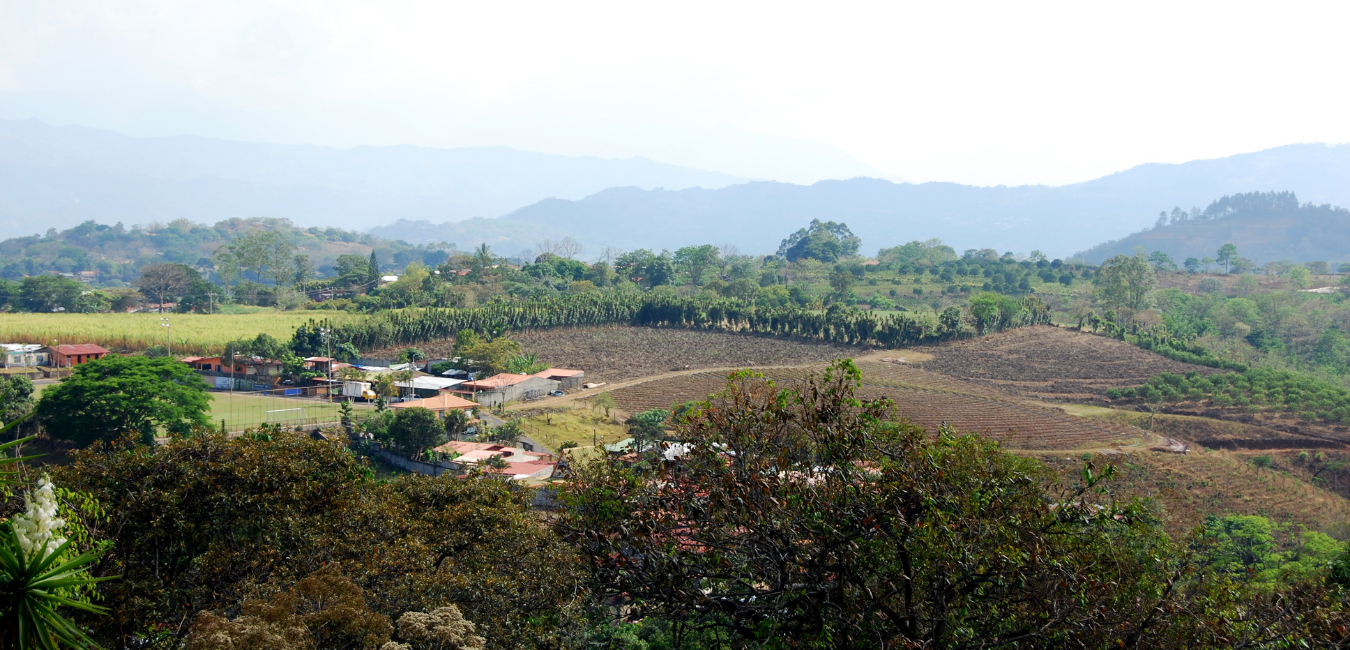
Take the trip of a lifetime to your favorite coffee producing country – Cirrí Sur, Naranjo Costa Rica
Buckle up grumpies, because today we are taking a trip to Costa Rica! All you need is a fresh hot cup of Grumpy Goat Costa Rican Coffee and we’re off!
Located at the heart of Costa Rica in the quaint province of Alajuela is Cirrí Sur of the Naranjo canton. Also known as one of the world’s most famous coffee-producing regions. While Costa Rica is known for its beautiful sandy beaches and thriving cities, the true Costa Rica experience comes from the quaint coffee-producing towns and provinces.
Most people wouldn’t think to plan a trip to Costa Rica just for some coffee. However, coffee plays such a huge role in Costa Rica’s economy, culture, and history that excluding it from your itinerary will make your trip incomplete.
A brief history of how coffee became the backbone of Costa Rica’s economy
Costa Rica was first exposed to coffee in the 1700s when settlers arrived. Due to the perfect weather conditions, the plant was able to take root almost instantly and eventually spread across the vast Costa Rican mountains.
This quickly led to a booming economy for Costa Rica and a specialty that no surrounding countries had at the time. In fact, Costa Rica was the first country in the area to dip its toes into the coffee industry.
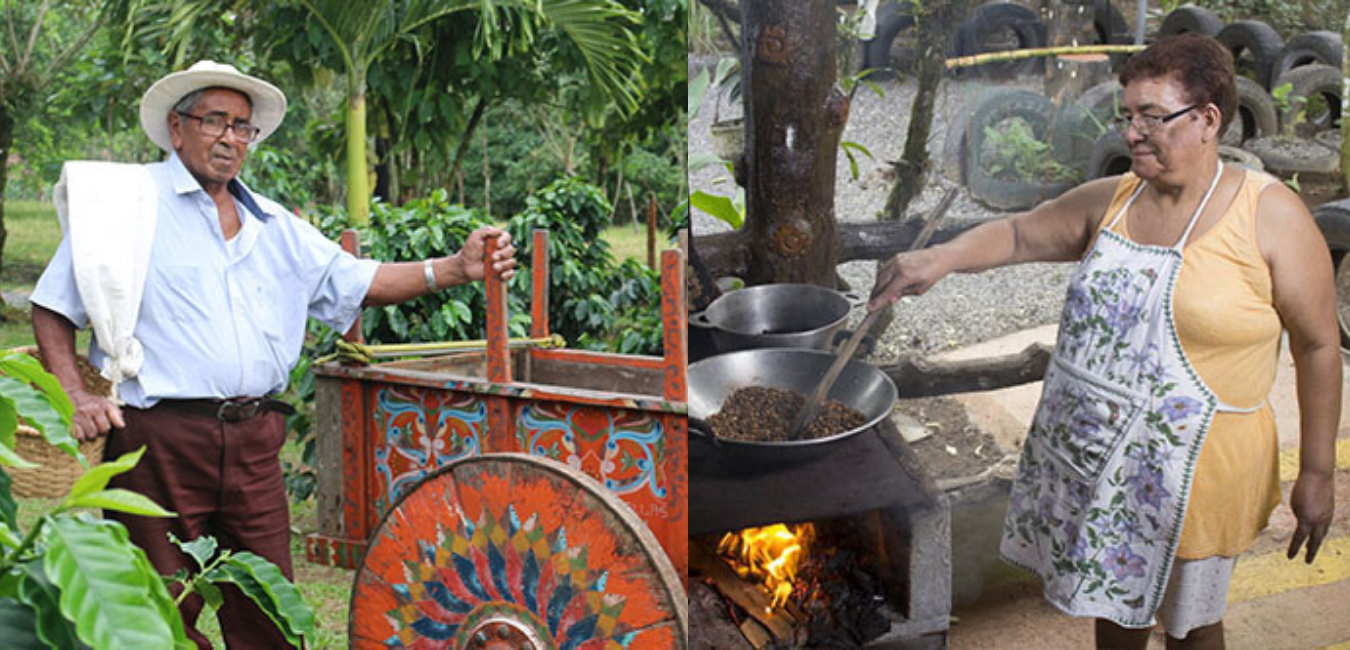
Since coffee is at the center of the Costa Rican economy, it’s also at the center of their culture. While there are many things that can divide individuals, coffee is certainly not one of them. Coffee in Costa Rica is a staple to their culture and their roots. No matter what someone’s social class or occupation is, a cup of coffee is enjoyed by every citizen that calls Costa Rica home.
Coffee first, then everything else – the different ways to process coffee crops in Costa Rica
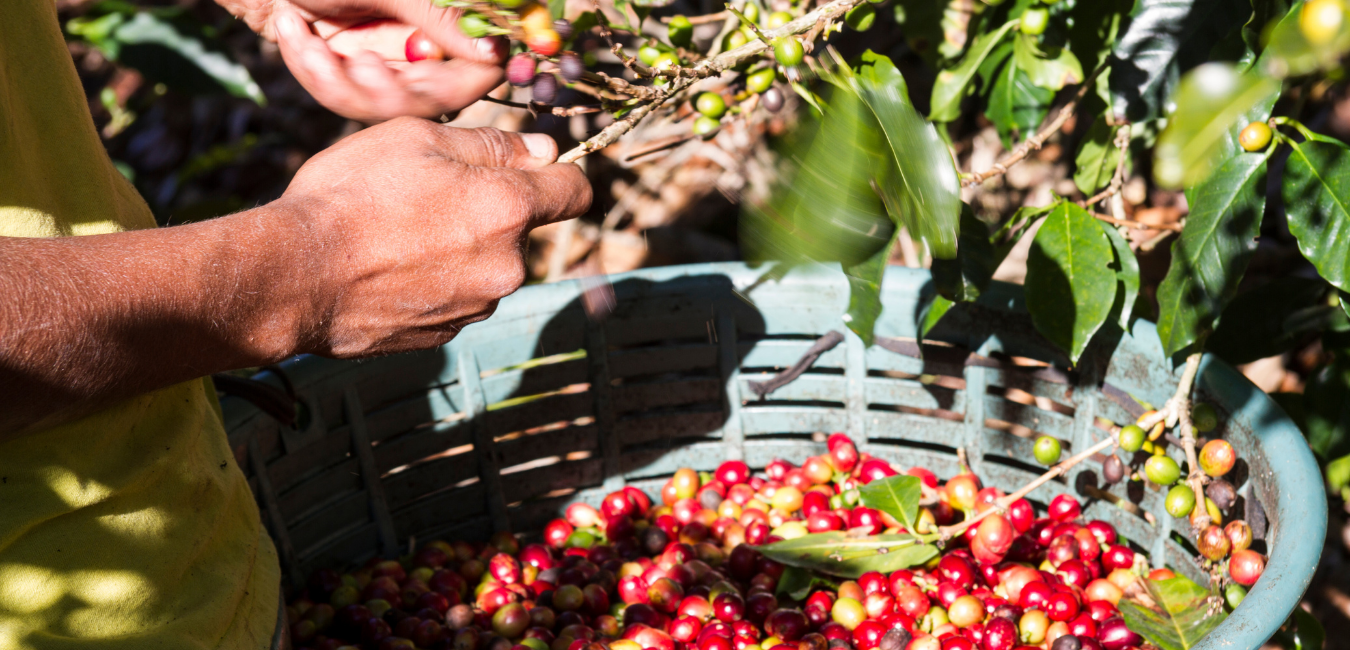
The Natural Process: In this type of process, the mature coffee bean (aka a cherry) is dried to separate the pulp from the seed. By utilizing this process, a unique flavor is created. Not to mention it reduces the amount of money spent to process the bean!
The Washed Process: Through this process, the coffee cherries are sent to a wet mill, and high-pressure water strips the pulp away from the seed. The majority of coffee crops use this method.
The Honey Process: This is often seen as a middle ground between the washed process and the natural process. This technique initially removes part of the fruit from the coffee beans and then the rest is left to dry and fall away from the bean over time.
How do you know which process produces the best flavor profile for you? Well, there’s only one way to find out…
Experience love at first sip – Alajuela Costa Rica coffee tours that are calling your name
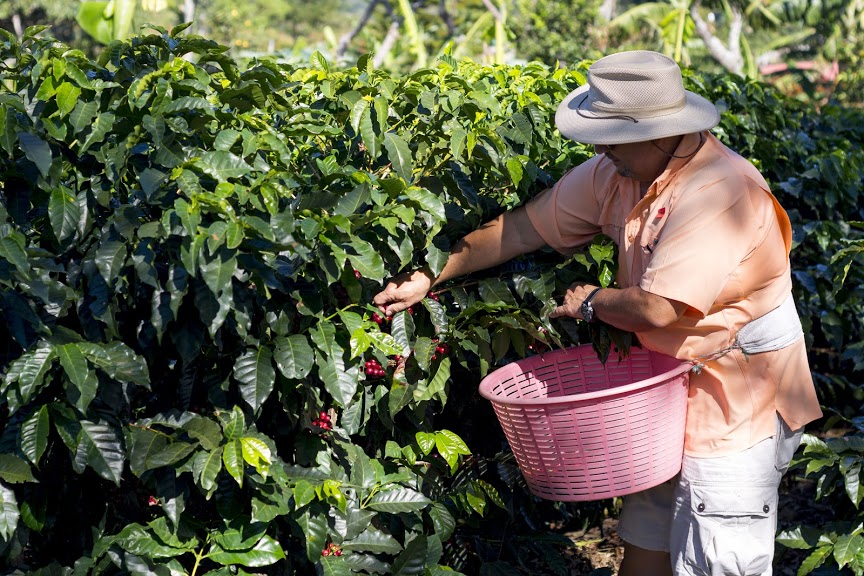
Just like visiting the beautiful white beaches while in Costa Rica is a must, so is signing up for some coffee tours. It’s truly an experience like no other. Not only do you get to watch the entire process and meet the hard-working families that have made this their lively hood, but you also get to drink pure, full-bodied coffee with beautiful scenery. It doesn’t get much better than that!
Here is a list we have compiled of the best coffee tours to go on in the Alajuela province:
The Doka Estate Coffee Tour: Located about an hour from Cirrí Sur, the Doka Estate is one of the oldest coffee plantations in Costa Rica! Stationed up in the valleys of the Alajuela province, the weather conditions provide a cool climate and fertile soil – the perfect place for coffee to take root.
When going on a Doka Estate Coffee Tour, you certainly get what you pay for! The tour takes you through the extensive process from planting the tree, to picking the cherries, roasting the beans, and making a hot cup of coffee the Costa Rican way.
Learn more about the history, the culture, and the impact of coffee on the people of Costa Rica. And most importantly – enjoy some great laughs, with great people and great coffee.
North Field Cafe: Craft Specialty Coffee and Chocolate Tour: who doesn’t love coffee and chocolate?! Experience the best of both worlds by going on a coffee and chocolate tour on the slopes of Volcano Arenal, La Fortuna, and San Carlos.
Located about two hours from Cirrí Sur, the North Field Cafe Tours allow you to genuinely experience all that Costa Rica is. Coffee and chocolate are strong pillars in Costa Rica’s economy and North Field Cafe Tours bring you up close and personal to some of the most fundamental aspects of their society.
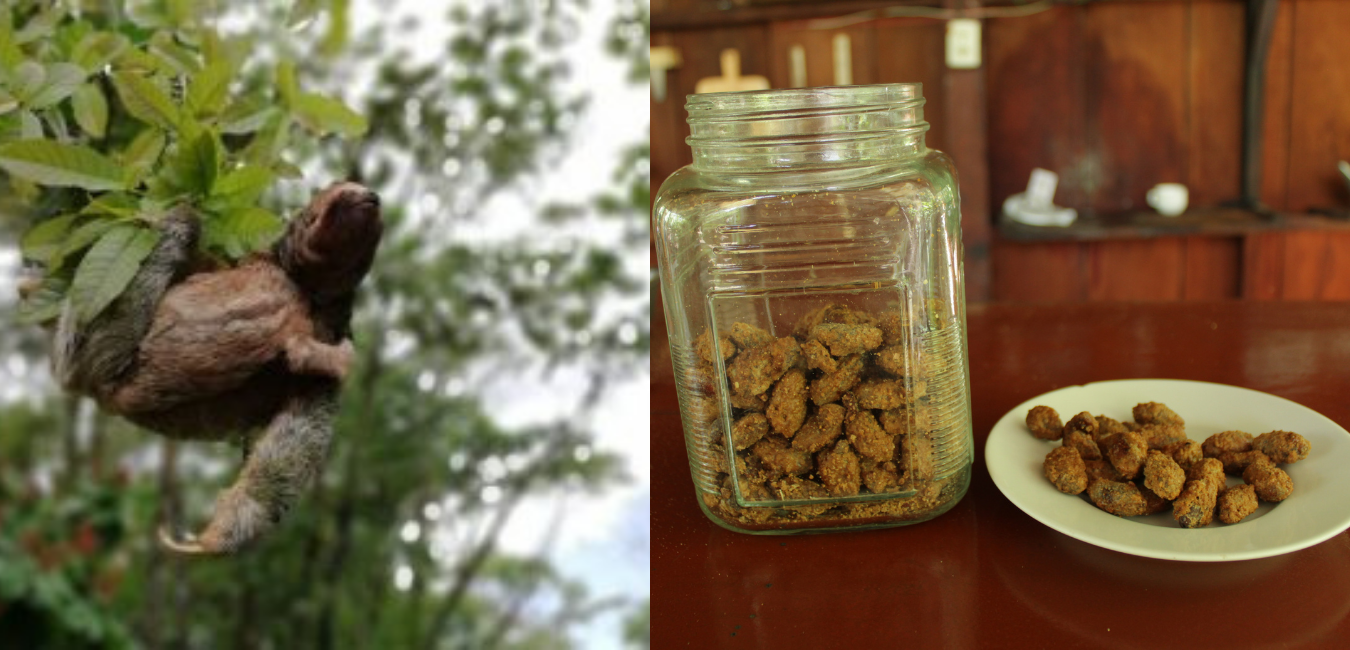
Sloth Coffee and Chocolate Tour: Bet you thought it couldn’t get any better than a coffee and chocolate tour?! This one-of-a-kind coffee tour allows you to relish the history of Costa Rican coffee and chocolate while simultaneously hanging out with some cool sloths! The only thing missing is some Grumpy Goats!
Located in the province of Alajuela about 2 hours from Cirrí Sur is the Arenal Jungle Tours. Experience coffee prepared the way that the ancestors of Costa Rica intended and go on a guided tour that allows you to experience the beautiful landscape of Costa Rica.
Don’t get us wrong, while you’re in Costa Rica you should definitely do all of the things a typical tourist would do. Go to San Jose, visit the Paos Volcano, go zip lining, get some really bad tan lines on the beach or maybe even go out on a safari! But you would surely miss out if you didn’t allow yourself to indulge deeper into the roots of Costa Rica by experiencing their true culture – coffee.
And hey, maybe a trip to Costa Rica isn’t in the budget for this year, but you know what the second best thing is? Our very own Grumpy Goat Costa Rican Coffee harvested in – you guessed it – Cirrí Sur, Naranjo! You may not be able to go to Costa Rica but at least you can brew a fresh cup of Grumpy Goat, read this blog and pretend like you’re enjoying a nice rainforest coffee tour surrounded by sloths. We can dream, can’t we?[/fusion_text][/fusion_builder_column][/fusion_builder_row][/fusion_builder_container]
Grumpy Goat Coffee Donated to Rescue Crews at Surfside Condo Collapse
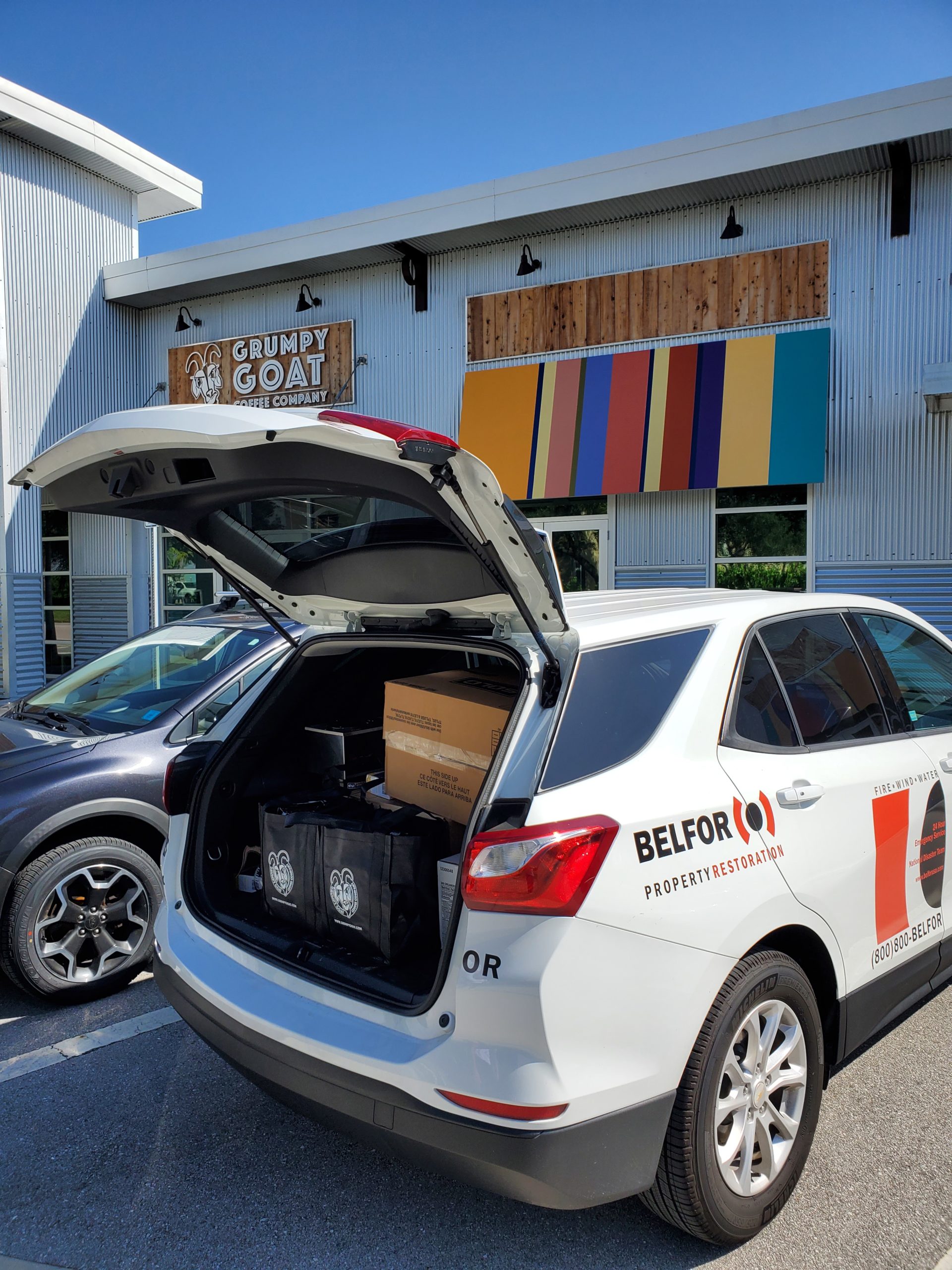
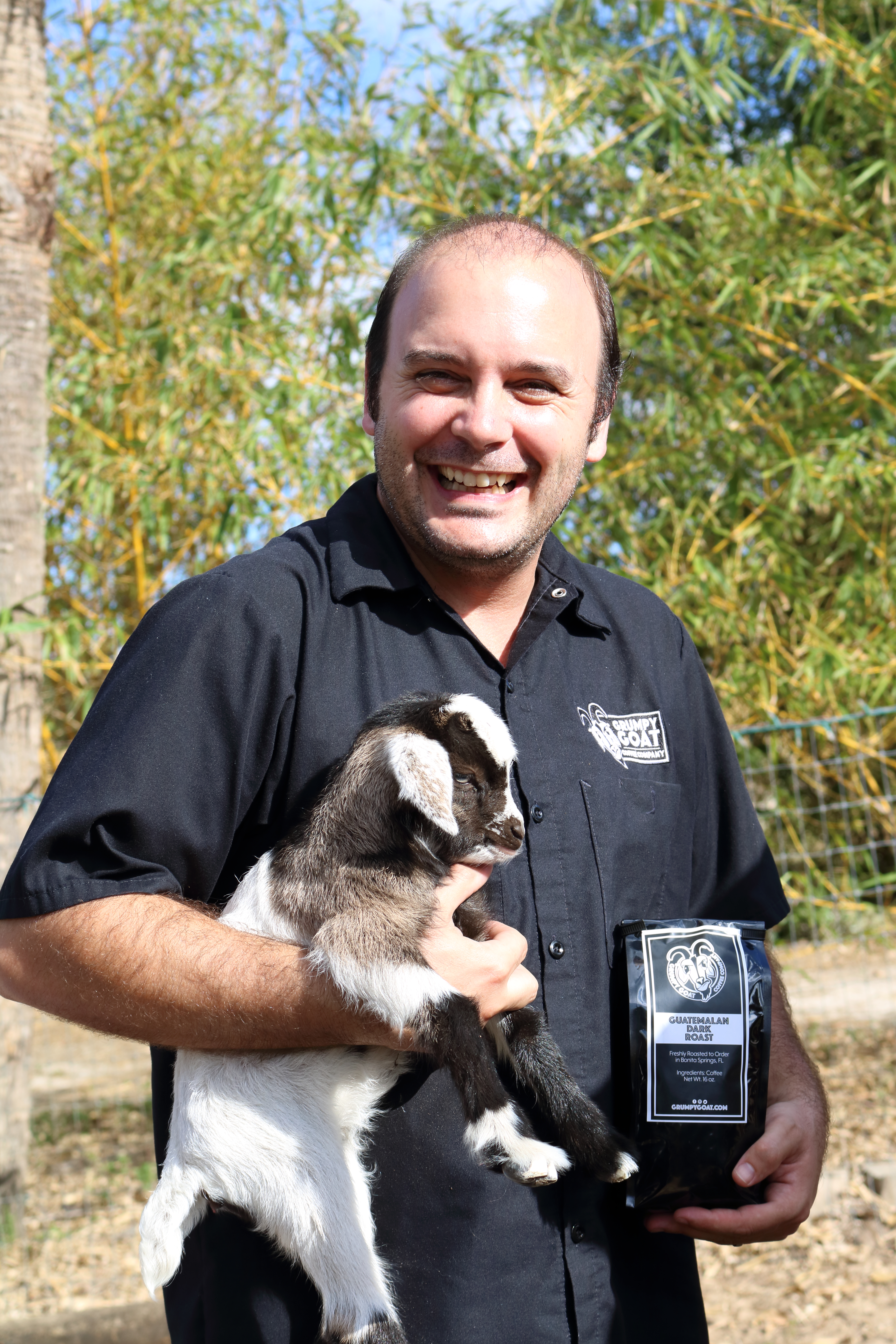
The BELFOR Property Restoration office in Bonita Springs, Fla., Grumpy Goat Coffee Company, Stan’s Coffee & Food Service and Fort Myers based marketing agency M&M Multimedia have collaborated with the BELFOR branch in Deerfield Beach, Fla. to donate more than 2,000 cups of coffee, commercial coffee brewing equipment and related coffee supplies to Mercy Chefs and the rescue crews working at the scene of the Champlain Towers South condo building in Surfside, Fla.
Mercy Chefs, a faith-based, non-profit disaster relief organization is in Surfside to provide professionally prepared, restaurant-quality meals to victims, volunteers, and first responders responding to the tragic building collapse. Shift after shift, they dutifully continue their unimaginable efforts, resting for just a few hours in between. When their shifts are over, Mercy Chefs is there to offer them a hot meal and a listening ear before they sleep and then head back again.
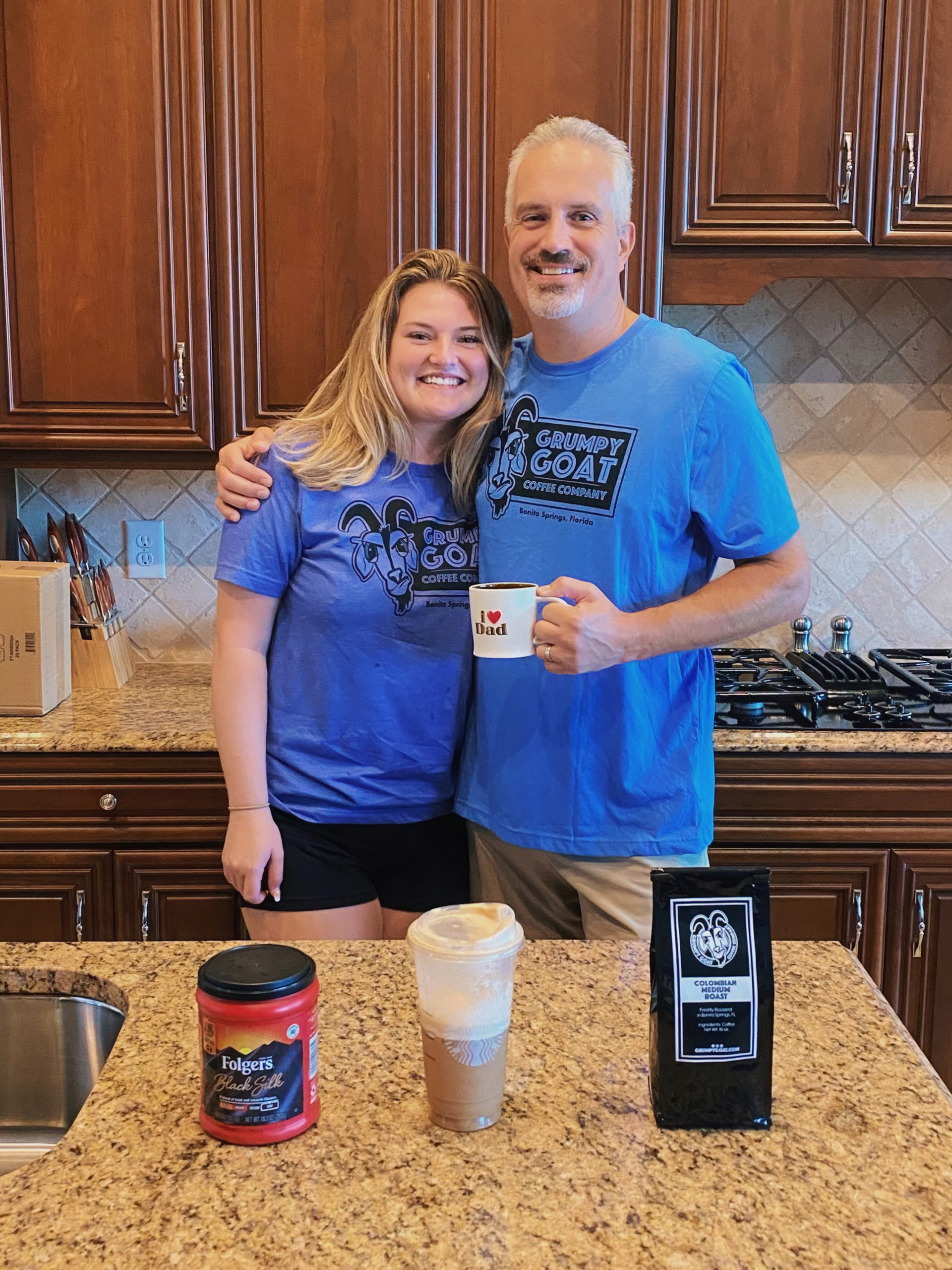
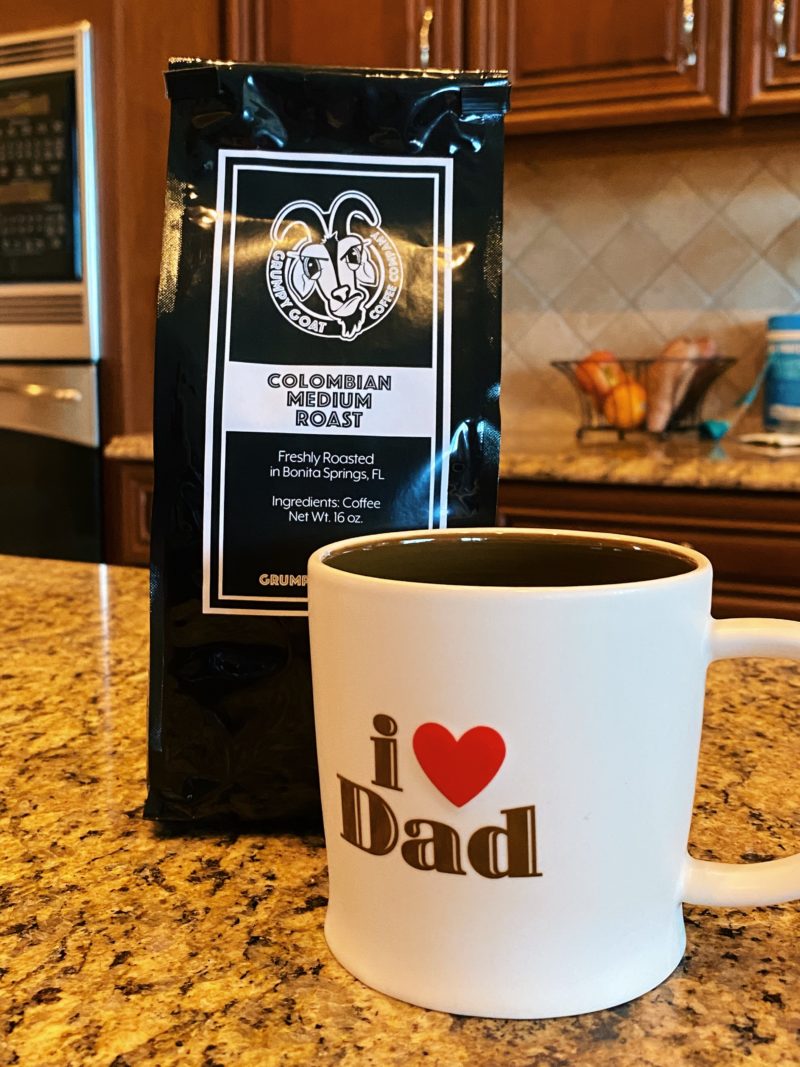
For as long as I can remember, my dad has never been the best at directions. He’s either missing a turn because he was too busy playing the air drums to Whole Lotta Love by Led Zeppelin, or he’s grumpily arguing with the navigation system because his morning cup of coffee hasn’t kicked in yet.
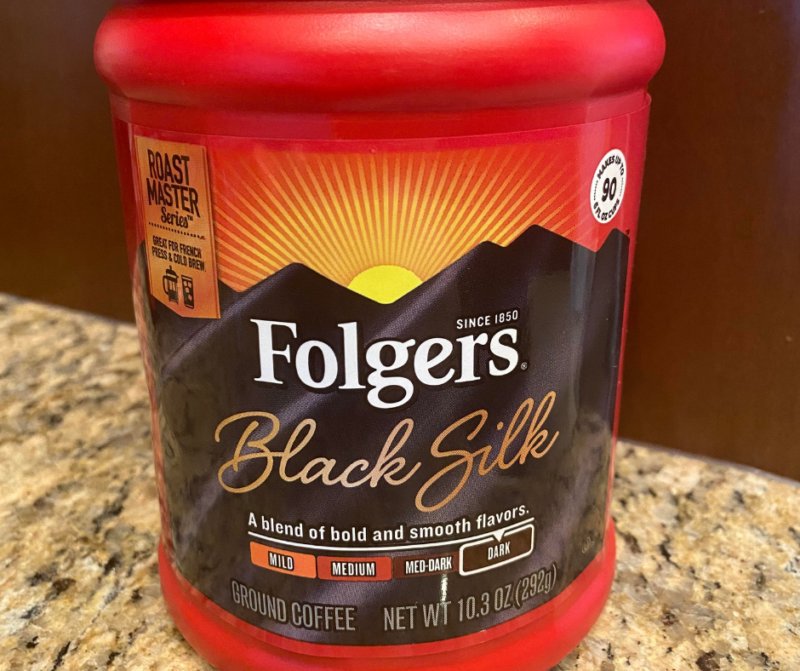
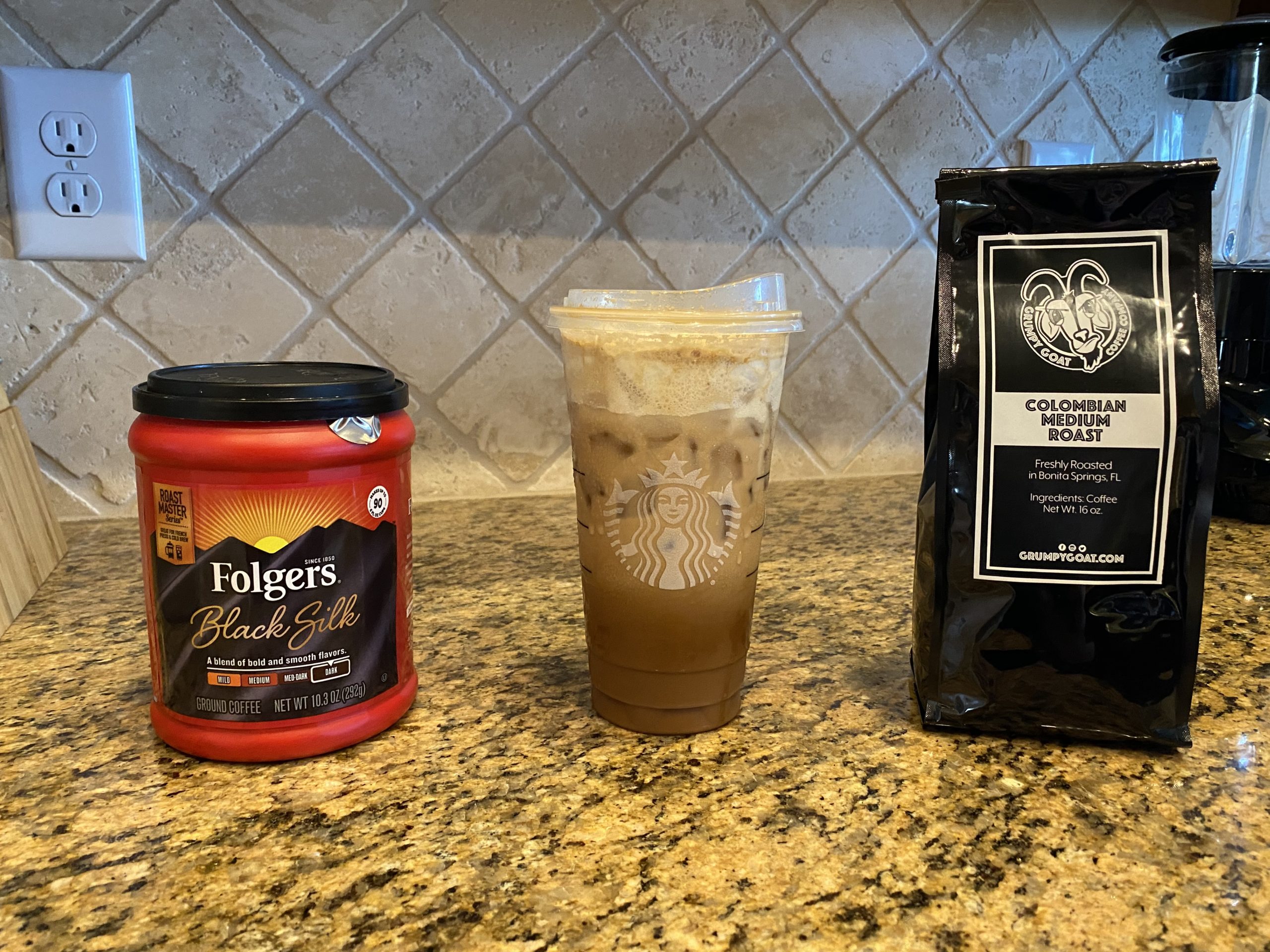
Growing up, I vividly remember the bright red tub of Folgers that used to sit on our countertop next to the coffee pot. It was so habitual for my dad to make his morning pot of coffee, that I grew to think it gave him some kind of superpower – how else would he make it through his constant meetings?
I remember asking my dad if I could take a sip of his superhero coffee. He laughed and said, “You’re not going to like it.”
He was right. I in fact did NOT like it.
When Starbucks mesmerized the world with its pretty decorated drinks and sweet flavors, my dad was left dumbfounded on why anyone would want to drink coffee that was more sweet than bitter. While I thought it was certainly a step up from Folgers, I didn’t realize how far behind we all were when it came to good coffee.
Like many impactful things in life, coffee has experienced a series of waves or changes that have influenced the way it’s produced, marketed and enjoyed.
I’ve come to the realization that maybe the reason my dad is grumpily arguing with the navigation system (even though he’s already had his morning cup of joe) is most likely because he doesn’t realize the evolution of coffee has introduced us to so much more than Folgers and instant coffee.
So, before my dad hops in the car today and asks Siri for directions to the new steakhouse that just opened, I’ve decided I’m going to give him some direction on what the different waves of coffee really mean.
The First Wave of Coffee
Me: Ok, let’s start with the basics and talk about the first wave of coffee.
Dad: I don’t understand – isn’t it all just coffee? And how come my GPS isn’t understanding that I want to take the backway to the steakhouse tonight?
Me: No dad, there’s a history behind it just like everything else. Let me explain the direction coffee has gone in before we figure out the directions to the steakhouse.
The roots of the first wave of coffee run back to the 1800s. Entrepreneurs of the time recognized that there was a market for providing coffee, only if it was affordable and “ready for the pot.”
I don’t blame my dad and the countless other parents in America who stuck with brands that came from the first wave. It was quick, easy and affordable – something every parent needs more of in their life.
However, the problem with first wave coffee is that it often sacrificed taste and quality to promote convenience.
Another problem with first wave coffee is the lack of background or history attached to the coffee you’re drinking. In order to make coffee like this convenient, it was often made in a factory, and you could certainly tell. When it comes to first wave coffee, there’s almost no mention of the bean’s origin country or even how it was processed.
Think of it this way, in this first wave of coffee, the consumer was the one who led the way. They knew they needed something that would give them a boost of energy but was still quick and easy for them to make.
But because of this major focus on convenience, a lot of other factors were left out of the equation.
Here are some common signs of first wave coffee:
Artificially or “naturally” flavored beans
Language of “premium” or gourmet”
Primarily pre-ground offerings
Super dark, bitter coffee
The supermarket coffee aisle
The Second Wave of Coffee
Me: Are you following so far dad? Or did you miss a turn along the way?
Dad: I guess so… basically you’re telling me the coffee I’m drinking is crap.
Me: Not necessarily, but coffee has grown with us as a society. So as we’ve grown and changed, so has the coffee we drink. We no longer have to drink coffee that we don’t really like the taste of just because it’s convenient. Let’s talk about the second wave of coffee.
The second wave of coffee can mainly be attributed to brands like Starbucks and the way it revolutionized the way we looked at and consumed coffee.
Starbucks helped influence “cafe culture,” meaning the focus was far less on the coffee you were drinking and more on the social aspect of the coffee you were drinking.
Starbucks led the way with upbeat elevator music and a comfortable atmosphere for college kids to sit and knock out their final paper or for businessmen to stop in for a quick coffee on the go.
With a high-quality coffee experience, there came higher-quality coffee. During this era of coffee, people started to want to know more about the origin countries that their coffee beans were coming from. People no longer wished to drink coffee that was mass-produced in a factory.
However, the focus still wasn’t fully on the coffee beans themselves, it was more centered around the kind of specialty drinks that could be made with coffee. The driving force behind this second wave was marketing the experience of drinking coffee.
By mixing espresso shots with sweet, flavorful syrups and caramel drizzle, Starbucks made drinking coffee fun and exciting.
Here are some common signs of Second Wave Coffee:
Heavy focus on flavored drinks
Fairly dark, bitter coffee
The upper shelf of the supermarket coffee aisle
Slight recognition of the coffee origin country
The Third Wave of Coffee
Dad: Okay, I think I get it now. Starbucks helped make drinking coffee be more than just a way to wake you up in the morning.
Me: Exactly, except it still missed some steps along the way. Think about it like it was wine –
Dad: Oh, I do like wine!
Me: – With wine, you prefer a Burgundy from France right?
Dad: Yes! It doesn’t get better than that.
Me: Well, that’s what the third wave of coffee did. This new era has helped people understand the difference between certain roasts like light, medium and dark – they also discovered which their taste buds preferred best. But the main thing that this new era of coffee has done is educate people on the many regions that coffee beans are produced and how they are produced – this helped many people realize that that they no longer had to rely on first wave brands, they wanted something fresher. You wouldn’t go back to drinking Barefoot wine after knowing what kind of Burgundy you like from France, right?
Dad: Heck no! Tell me more about the third wave.
The third wave actually has its roots in the 1980s with a niche community that was very focused on the origin and production of coffee beans. Since this community was so small, their goals and ideas didn’t really blossom until recent years.
In fact, the term third-wave coffee wasn’t coined until 1999. This new era awakened many people in what is now referred to as a “coffee renaissance.”
The thing with first and second-wave coffee is that it was so bitter that nobody really enjoyed the taste, they just wanted the energy that came along with it. Of course second-wave coffee tried to fix this with syrup and heavy milk, but when those factors were taken out of the equation, you were still left with bitter coffee that just wasn’t enjoyable.
The goal of third-wave coffee is to find coffee that isn’t bitter or ashy, but instead so enjoyable you don’t even need to add anything to it in order to love it.
How do you find coffee like that? Well, you won’t find it in the grocery store coffee aisle that’s for sure. Instead, look for local coffee vendors, roasters or shops that are transparent with the coffee beans they sell.
Specific flavor notes (honey sweetness, rose aromatics, and orange acidity)
Roast profiles specific to bean origin
Latte art
Single-origin beans
High degree of origin transparency
Manual brewing methods like pour-over cones and french presses
Freshness transparency by publishing specific roast dates
Certifications such as Fair Trade, Shade Grown, Organic, etc
The Different Waves of Coffee
Dad: I get it now! There’s a lot more to coffee than just convenience and a boost of energy
Me: Exactly! You can actually enjoy the coffee you drink and not just suffer through it in order to get your daily dose of caffeine. Now, let’s figure out these directions to the steakhouse.
Dad: Wait, real quick. I just googled specialty coffee roasters in our area. Let’s plug in the directions and stop here to pick up some origin specialty coffee beans before we go to the steakhouse.
You will see it as a setting on many coffee grinders and it results in a finer grind.
Any coffee beans can be ground to an espresso level of fineness. That doesn’t mean that every coffee bean makes a great cup of espresso.
Which brings us back to the premise that Grumpy Goat loves to teach coffee lovers about.
A main key to the perfect cup of coffee is the quality and freshness of the coffee beans.
Espresso is widely popular. The power of marketing and messaging has taught us that it is a special coffee experience. Espresso lovers have come to cherish the crema that forms on the surface of their espresso style coffee.
What exactly is espresso?
There’s more to the espresso story than meets the eye.
In fact, there’s a dark hidden secret about traditional espresso.
It has to do with the coffee beans used to make it.
Typically, espresso is a blend of arabica coffee beans with some robusta coffee beans.
Robusta beans, although low quality and almost undrinkable on their own, serve two important roles in the making of an espresso.
First, the robusta beans contain about double the caffeine of arabica beans.
Second, it’s the robusta bean that allows for a thicker crema to form on top.
What really defines an espresso is how it is brewed, and that’s why the grind type is critical.
The grind size for espresso is very fine. This fineness creates a more compact surface area and resistance for the pressurized hot water to flow through. This process results in a more intense and concentrated coffee experience.
An espresso machine is designed to create pressurized extraction as it forces hot water under very high pressure through a compressed bed of roasted, ground coffee.
This style of coffee is widely popular, helped along with mass marketing that this is how a great cup of coffee should be experienced and thereby creating a use for robusta coffee beans that are bitter on their own.
The secret behind espresso crema
Espresso style coffee is known for the thick foamy crema that forms on the surface of the coffee.
Reddish and caramel in color, the tiny bubbles of the crema are visually appealing and make for great Instagram posts.
But the carbon dioxide gas in the crema contributes to the bitterness of the espresso taste.
So, it’s not uncommon to have an attractive looking espresso with a less than desired taste.
See for yourself and try scraping the foam away and letting the coffee stand on its own. Or, mix the crema in and experience an entirely different flavor profile.
Either way, know that you can enjoy a strong cup of espresso without an overly thick crema as long as you are using fresh, high quality coffee beans.
Does Grumpy Goat have espresso beans?
It’s a valid question and we are happy to answer and offer advice.
But it all starts with the origin, quality and freshness of the beans.
Grumpy Goat focuses solely on high quality, single origin, fully traceable coffee beans. No blending, no flavoring, no risk of mishandling.
There are several Grumpy Goat coffee origins that will make a great espresso style experience.
Examples include Colombian, Ethiopian, Kenyan and Sumatra and although traditionally most people would opt for a dark roast, do not be afraid to try making an espresso with a medium roast.
In fact, many coffee-forward cultures such as in Scandinavia, have fully embraced enjoying espresso style coffee using single origin beans and using lighter roast profiles than the traditional Italian espresso.
There’s no right or wrong here. It boils down to your personal taste and we encourage you to experiment and land on what types of coffee fit best with your palate.
But without the blending of the robusta beans you are unlikely to see the same thick, foamy lid form on the surface of your cup. Not to say there won’t be some crema – there will be – just not the same as when the low quality robusta beans are blended in.
The crema is arguably a mask that inhibits the true tasting notes of the beans from being experienced. If you’re using low quality beans then perhaps the crema is a nice complement to hedge against the bitterness.
But when you’re using high quality coffee beans you want that flavor profile to shine.
And remember, it’s the marketing that has “taught” us that the crema is what makes espresso special.
One skyrocketing trend that was triggered by people spending more time indoors during the coronavirus pandemic is brewing coffee at home. “Coffee Cupping” is the process of tasting, describing, and scoring coffee.
Trying different coffees and different brewing methods can be fun – a lot like doing a wine tasting.
Expertly trained and licensed professional “cuppers” grade the coffees. These very skilled individuals have completed testing requirements much like the Master Sommeliers in the world of wine.
So we thought we would share some tips about how to do a coffee cupping at home.
Items Needed for Coffee Cupping
No fancy equipment required!
Preparing to have fun with your at-home coffee cupping only requires a few simple items which you’ll find already in most kitchens.
Even if you do not have exactly the right items, you can improvise without too much inconvenience.
If you do not have a coffee grinder at home, no problem. Just make sure that you use freshly ground coffee from your favorite roaster.
Or, if you are curious about getting your own coffee grinder, check out our coffee grinding article for options and tips.
What heck is a “cupping vessel?” A vessel is ceramic or tempered glass that holds 7-9 fluid ounces and is around three inches in diameter like in this picture courtesy of Olam Coffee.
Preparing for your Coffee Cupping
A good coffee cupping experience will include at least three or four single origin coffees. But if you are feeling more adventurous you can certainly expand that number. Generally, you can cup six samples with a single tea kettle. Grumpy Goat offers at least twelve single origin coffee options throughout the year and usually more as we receive other origins in limited quantity depending upon the season. Here are a couple of different strategies or themes you can consider for your coffee cupping experience:
1. Region Specific Comparison
There are four main regions in the World where the best coffee is grown: Africa, Indonesia, South America, Central America. One cupping theme you can try is the select all your single origin coffees from the same region and compare them. For example if you do an African theme you can cup with Kenyan, Ethiopian, Tanzanian and Burundi and compare and contrast them. Even though they are all from African you will find them to all be unique.
2. Cross-Region Comparison
Alternatively, you can prepare a coffee cupping experience where you compare different parts of the World. For example, you can get one single origin from each of the four main growing regions. One grouping that would offer a diverse menu would include Ethiopian, Costa Rican, Peruvian and Sumatra. Put 8-10 grams (approximately 0.3 ounces) of ground coffee into each cup or bowl.
Start your tea kettle to boil the water. (Reminder – water affects coffee taste so check out our tips about water for brewing coffee)
Coffee Grind Aroma – Dry
The first part of your coffee cupping evaluation is the sniff the aroma of the dry coffee grinds.
Jot down your notes about what you smell. You may not be able to pinpoint the exact words about what you smell but don’t worry – write something – there’s no wrong answers.
Many people struggle to assign names to smells.
In fact, the words you may choose can be similar to the tasting notes of a coffee.
Here is a short cheat list of vocabulary that you may experience while sniffing the coffee grind aroma: floral, nutty, cocoa, vanilla, fruity, musty, cinnamon, caramel, fragrant, spicy, citrusy.
This isn’t a complete list by any means but will put you on the right path. Don’t be afraid to use your own words. There is no wrong answer.
And keep in mind that each person has their own sensitivities to smells and tastes. So even if your coffee cupping pals experience a different aroma than you, it does not mean that someone is wrong.
Repeat this for each coffee you have.
If your nose becomes overwhelmed by too many scents, you can hit the reset button on your nose by sniffing your forearm.
Coffee Grind Aroma – Wet
The tea kettle is whistling and you’re ready to pour some hot boiling water on the dry coffee grinds.
But before we taste it is important to experience the aroma of the coffee after the grinds are soaked with some boiling water.
Pour 150 ml of water (about 5 fluid ounces) “just off the boil,” (around 200°F / 93°C) over the grounds in each cup.
Wait about four minutes. Watch for a crust of coffee grounds that forms on top of each cup.
Using the back of your soup spoon, push the grounds aside while sniffing the coffee. TIP: position your nose close-in as you “break the crust”; this is the moment when most of the coffee aromas are released.
Make sure all of the grounds have been broken up completely.
Just like you did with the dry coffee grounds, jot down what you smell. Remember, there’s no wrong answers.
Remember to rinse your spoon between each coffee to avoid mixing them together.
HINT: have a glass of the rest of the water from the tea kettle on the table so you dunk your spoon to rinse.
Removal of Grinds when Coffee Cupping
Before we move on to tasting the coffee, there’s one step required which may take some repetition before you get the technique down but don’t stress over it.
Coffee cupping at home is supposed to be fun so don’t get caught up in the technique.
When you “break the crust,” the coffee grounds will settle to the cup’s bottom.
You should see a caramel-colored foam still floating on the surface.
Professional coffee cuppers use two spoons, held vertically, to steer that foam into one spot of the cup and then pull it all out at once. Years of practice and cupping hundreds of vessels help them perfect this technique.
But at home you do not need to be perfect. Do your best at cleaning the surface of the coffee of any remaining foam.
Don’t forget to rinse your spoon between coffees.
It’s Time to Taste the Coffee
We do not want anyone burning their tongue and taste buds so allow the coffee to cool from boiling.
Tasting Round 1 of Coffee Cupping
Lift a spoonful of coffee to your lips and “slurp it into your mouth like a rude dinner guest eating soup.” (we borrowed that well put phrase from Olam Coffee)
The action of slurping is helping you cool down the hot coffee but also you are intaking air which will send some of the coffee compounds back up into the smell receptors behind your nose.
Another Reminder: rinse your spoon after each cup so you are not co-mingling tastes
Then, just like with your smell tests, jot something down.
Here is a short cheat list of vocabulary that you may experience while sipping the coffee: nutty, chocolaty, bright, earthy, rich, sweet, savory, vanilla, berries, fruity, cinnamon, caramel, spicy, citrusy, bitter, dull, dry, smooth, tea-like, full body.
Taste is subjective so there are no wrong answers here.
Tasting Round 2 of Coffee Cupping
After completing the first round of sipping and note taking, let the coffees cool for another five minutes.
Then taste all of them again following same process.
The tasting notes of coffee will change as it cools.
On your second round you will experience new things about the coffee as the temperature changes.
Jot down those additional notes.
Coffee Cupping at Home with Friends
After completing the note taking on all the coffees, all the participants can share their findings, rank their favorites and compare notes.
Similar to participating in a wine tasting, the use of flavor profiles and tasting notes and aromas to describe coffee is the at the core of a fun coffee cupping experience at home.
Just like it matters to properly prepare and serve wine, it is important to properly prepare and serve coffee to experience the best cup possible.
Now that you have the process down for doing a coffee cupping event at home you can invite your friends to a unique and fun experience.
Ugandan Gorilla Summit Coffee – Lifting Families out of Poverty
Historically, hundreds of Ugandan small holder farmers supplied lower quality robusta coffee to the world but Gorilla Summit Coffee is working to change that.
In recent years, successful efforts have been made to develop a high quality, specialty arabica coffee industry. New partnerships with premier coffee roasters and distributors around the world (like Grumpy Goat Coffee) have been established.
The specialty coffee is in limited supply but here’s how you can claim yours.
Gorilla Summit coffee can be ordered via our online store or picked up locally in our Bonita Springs coffee roastery.
If you are not yet receiving email alerts from Grumpy Goat click here to signup.
Introducing Ugandan Gorilla Summit Coffee
Gorilla Summit Coffee is a project started in 2012 by Gerald K. Mbabazi. The singular goal is to help coffee farmers earn more income.
The program kicked-off in Kanugu, a west Ugandan village.
Traditionally the coffee farmers there were only able to produce lower quality coffee which resulted being paid ridiculously low prices—sometimes less than $0.05 per pound.
Through the skill building offered by Mr. Mbabzi’s Gorilla Summit Coffee program, farmers improved their growing and harvesting techniques.
They also constructed their own coffee cherry processing station and implemented more modern equipment. These steps help Ugandan farmers produce higher-quality coffee.
In fact, they have achieved cupping scores well into the specialty coffee range (85 points or higher), adding internationally recognized credibility.
Better quality has led to premium prices being paid. This has resulted in the doubling of incomes for these otherwise vulnerable families. The quality of life of more than 1,800 coffee farmers and their families is improved with every crop, every bag, and every cup of coffee we enjoy.
Community Benefits Thanks to Ugandan Gorilla Summit Coffee
There are several transformative community improvement projects that are underwritten from the premium revenues generated by Ugandan Gorilla Summit Coffee.
Clean Water
We take clean water for granted in the United States. But in many developing areas of the world, clean well is difficult to access. The premium prices earned by Ugandan Gorilla Summit coffee farmers help the community build new clean water wells. This improves the quality of life for everyone.
Education
Leaving the world a better place for our children is a goal each generation pursues. Education is one path by which people can improve the economic opportunities available to them. The Ugandan Gorilla Summit Coffee program has resulted in training programs for farmers. In addition, there are new opportunities for children by building schools, even one accredited university.
Economic Diversification
Increased revenues from selling high quality coffee allows Uganda farmers to reinvest in other farming strategies such as raising livestock such as chickens. Small scale egg production is another benefit.
Health Care
Imagine not having access to a medical professional during a complicated pregnancy. The Ugandan Gorilla Summit program generates monies that are used to build maternity clinics in remote areas. These are so essential as mothers have no access to hospital care and many of the babies die due to inadequate birthing facilities and professional care.
Give-a-Goat Campaign
Selected farmers from the program were granted goats. Then when each new baby goat is born, it’s paid forward to a neighboring farmer at no cost. As a result, an ecosystem of small-scale goat farming has been set-up. This opens new income streams for the smallholder farmers.
Solar Energy
Electricity is yet another thing we take for granted in the United States but is less common in developing regions of the world. Thanks to the Ugandan Gorilla Summit Coffee program, the participating growers have the opportunity to purchase solar lamps for their homes. Children can do their school work at night using safe light rather than kerosene which is dangerous to breathe.
Mosquito Nets
The most effective means of preventing malaria is sleeping under a mosquito net. Malaria is transmitted by certain mosquitoes when they bite. The extra revenues generated by Ugandan Gorilla Summit Coffee farmers are used to purchase mosquito nets to protect coffee growers families.
Think about it.
For every bag of coffee you purchase, a child is able to go to school.
For every cup of coffee you enjoy, a mother is able to afford a hospital bill.
For every sip of the gorilla summit coffee, you help lift families out of poverty.
Ugandan Gorilla Summit Coffee Tasting Notes
The volcanic soils of the Bwindi mountains that rise high above Lake Victoria give the unique tasting notes to the Ugandan coffee varieties.
The common tasting notes of this region’s coffee include raisins, black cherries and dark chocolate. Recent harvests are described as sweet and heavy with tart fruit acidity, cocoa, coffee and mild berry flavors. But tasting notes can change from season to season and harvest to harvest.
These coffees are grown in an area near Bwindi Impenetrable National Park and forest, a protected primeval forest that reaches elevations up to 2,600 meters.
More About Ugandan Gorilla Summit Coffee
One of the more heartwarming results of the community improvement projects is that human interference with gorillas has greatly gone down. Since gorillas do not eat coffee berries, this has promoted the two groups co-existing in harmony.
Since Ugandan coffee farmers and their families are able to be paid a living wage and benefit from the additional community projects there is less pressure to compete with gorilla families for the habitat.
The bottom line impact of the Gorilla Summit Coffee program is more disposal income for farmers to care for their family and to create a brighter future for themselves and their children.
Grumpy Goat Coffee is excited to share the story behind Ugandan Gorilla Summit Coffee. The coffee is in limited supply. If you are not yet receiving email alerts from Grumpy Goat click here to signup.
Grumpy Goat Coffee Company, a microroaster of gourmet grade, single origin coffee has added a new product option to its online store. In addition to one pound bags, coffee shoppers can now order six ounce bags of beans, roasted to order. The six ounce option is available in any of the 14 origins available. Coffee beans can be ordered in either medium or dark roast. Customers may select either whole beans or request them ground for any brew method.
“With so many people staying at home more often and relying upon online ordering we have made our six ounce option available online,” said Brian Abernathy, master roaster and founder of Grumpy Goat Coffee. “ The six ounce bags are a great option to try coffee from the top growing regions in the world and can be bundled to create a variety pack.”
In addition, the company has enhanced its free shipping offer to anywhere in the continental United States for orders of $35 or more. Local customers may also make an appointment to pick up their roasted-to-order beans at the Grumpy Goat roastery in Bonita Springs located at 28280 Old 41 Rd., Suite M-11 in the Causeway Commerce Park.
When we meet coffee lovers at farmers markets, microbreweries and other special events, we have fun talking and answering questions about coffee.
A comparison we often make that is relatable is wine. Much like wine enthusiasts seek out highly-rated wines to try, they also appreciate the aroma and tasting notes of the best coffee on the planet.
Here are four ways that the coffee and wine experience are similar.
1. Scoring
Most people we speak with don’t realize that coffee is scored on a 100 point system. This is similar to the wine industry. When you visit a wine store the point score that a wine has earned is usually prominently displayed on the shelf tag. Expertly trained and licensed professional “cuppers” grade the coffees. These very skilled individuals have completed testing requirements much like the Master Sommeliers in the world of wine. After undergoing rigorous evaluation, coffees scoring 86 points and above (Grumpy Goat only selects beans rated 86 points or higher) can be categorized as “Specialty Coffee.” This designation applies to only 1% of the world’s coffee. But the similarities between coffee and wine go beyond the scoring system.
2. Terroir
Wine requires growing grapes and coffee requires growing beans. France and Australia are famous for their wine making. Countries like Ethiopia and Kenya are considered the most ideal growing regions for specialty coffee. The highest quality coffee beans and grapes are produced in special microclimates within these larger regions.
Perhaps the most magical thing that impacts both beverages are the environmental characteristics in which the grapes and beans grow. Soil, altitude and climate factors like sun exposure (i.e., a growing region’s terroir) all contribute to the unique flavor, tasting notes and aroma of what ultimately becomes your glass of wine or cup of coffee.
3. Tasting Notes
The use of flavor profiles are one of the most obvious similarities between wines and coffees. Both beverages exude a unique bouquet of aromas, textures and tasting notes. Finish and acidity are also characteristics commonly used to describe these beverages.
The roasting process impacts the coffee much in the same way that wine making choices in the cellar will affect the final outcome of a wine. Grumpy Goat spends a lot of time researching coffee beans available around the world. We learn about the flavor profile of the coffee and craft a roasting that will allow the flavors of the beans to come through at their finest. The similarities between wine and coffee don’t stop there.
4. Serving
Fans of both coffee and wine each have their own rituals for preparation and serving too. When wine enthusiasts uncork a bottle, they serve it at the right temperature. They decant the wine when necessary. They even use specific types of stemware designed to capture the bouquet of the wine. Similarly, coffee lovers embrace their own favorite serving methods. For instance, the brewing method and device used to make the coffee is a highly personal preference. Grumpy Goat will grind your coffee to any level of coarseness or fineness if you don’t have your own grinder. Just like it matters to properly prepare and serve wine, it is important to properly prepare and serve coffee to experience the best cup possible.
Now that you see ways that coffee and wine are similar you’ll never taste a cup of coffee the same way again. Being inquisitive about how a coffee scores, the uniqueness of the growing region, the tasting notes and how they’re impacted by the preparation and serving will allow you to be an enlightened coffee enthusiast.
Fresh roasted gourmet coffee is a treat all by itself.
Single origin coffee beans grown at high altitude and rated by professional cuppers at 86 points or higher makes for a triple crown of gourmet coffee.
But what if you could enjoy your morning brew and also get even more healthy boosts from your coffee routine?
Look no further.
Here are six easy coffee add-ons to try to make your coffee even healthier. Try these tweaks to get the most out of your coffee routine.
6 Tweaks to Make Your Coffee Healthier
1. Coconut Water
Popularly used for rehydration (similar to a sports drink) or to help with an illness, coconut water is a safe, additive to coffee.
Although the Mayo Clinic considers plain water to be a better alternative than coconut water, they acknowledge that coconut water has natural electrolytes.
Examples include potassium (most people do not get enough potassium), sodium and manganese but amounts vary based on the maturity of the coconut.
2. Collagen Powder
If you’ve read about dermatologists suggesting people spike their morning smoothie or coffee with collagen powder, here’s why.
Although the studies done so far on collagen are small and at least partially funded by industry, many doctors find the results promising.
According to WebMD.com, “as a protein source alone, collagen is an excellent one, packing in more protein per calorie than other sources while containing less sodium and sugar.”
Benefits of collagen that preliminary research has revealed are that it’s a powerful wound healer, able to stop bleeding, recruit immune and skin cells, and stimulate new blood vessel formation, skin aging prevention (fewer wrinkles and improved skin elasticity).
When shopping for collagen powder, seek a trusted brand with a third-party label like NSF or USP.
3. Cinnamon
Since medieval times, cinnamon spice (ground up bark from the cinnamon tree), has been both a medicinal treatment and flavor enhancing tool for desserts and candy – and coffee too.
One of the most significant findings is its relationship to better brain health such as improved memory and learning.
According to the U.S. National Library of Medicine, “in addition to being an antioxidant, anti-inflammatory, antidiabetic, antimicrobial, anticancer, lipid-lowering, and cardiovascular-disease-lowering compound, cinnamon has also been reported to have activities against neurological disorders, such as Parkinson’s and Alzheimer’s diseases.”
Cinnamon will make a great complement to Central and South American coffee such as Grumpy Goat Brazilian or Costa Rican bean types.
4. Medicinal Mushrooms
It is no secret that mushrooms are a rich source of nutrients and bioactive compounds that offer tremendous medicinal attributes which are valuable for human health.
Along with enhancing bone health, preventing cardiovascular disease and boosting the immune system, therapeutic applications of edible mushrooms include:
-anticancerous -anti-obesity
-anti-diabetic -anti-ageing
-antiasthmatic -antiviral
-antiarthritic
But adding it to coffee may seem odd.
The types of mushrooms that are recommended by experts to support the immune system are Turkey Tail, Lion’s Mane, Chaga, Reishi or Cordyceps.
Here’s how it works according to Microsoft News. “Dried mushrooms are boiled and liquefied into an extract and then added to coffees and teas for an added superfood boost” to your coffee or tea.
Alternatively, mushroom powders are available too.
When shopping for these make sure to get a powder made from “whole mushroom fruiting bodies.”
Some mushroom powders are made with grain fillers or from the roots of the mushroom rather than the mushroom body.
Read the labels carefully to ensure you select one that will truly offer health benefits.
Fans rave that this combination results in a robust coffee or tea that is not compromised by any taste of mushrooms.
5. Fats (Bulletproof Coffee)
Most people do not think twice about adding milk or cream to their coffee. Milk is a great source of vitamins.
But they may raise an eyebrow at the suggestion of adding butter or ghee to coffee.
Also known by the brand name Bulletproof coffee, adding a source of fat such as butter to your coffee may offer health benefits and enhance your coffee drinking experience.
The idea behind it is since fats can make you feel full faster, you may find that you actually eat less.
Fats burn slowly within the body which makes them a prolonged source of energy. This helps in the reduction of appetite when compared to adding sugar to coffee. Sugars will spike your blood sugar levels and decrease your ability to burn fat.
Butter coffee creates a rich, frothy drink. So starting your day with some butter coffee can help decrease your appetite and calorie intake.
An alternative to butter is ghee, popular in India and Pakistan.
Ghee is more concentrated in fat than butter because its water and milk solids have been removed.
According to Healthline, “test-tube and animal studies suggest that these fats may reduce inflammation and promote gut health.”
Ghee removes all the milk sugar lactose and milk protein casein. This makes it a better option for people who manage allergies or sensitivities to dairy.
Coconut oil is another option for making a fat enhanced coffee.
6. Dark Chocolate
Got a sweet tooth?
Adding chocolate with a high percentage of cacao instead of sugar may be a better alternative for your health.
A Clarkson University and University of Georgia study revealed that a caffeine and cocoa combination in coffee created two effects.
First, quicker response rates were observed. Second, the chocolate coffee combo decreased “caffeine’s anxiety-producing effects.”
A research abstract published at PubMed.com about cocoa shows that it is loaded with antioxidants and associated with all sorts of health benefits.
For example, cocoa helps in weight loss. It also enhances cognition and positive mood and is linked to reduced risk of heart disease.
The best method to mix chocolate into your coffee is to scrape in thin chocolate shavings. Then slowly stir them into your coffee. The small pieces will melt easier.
Alternatively place a dark chocolate square in the bottom of your coffee mug. Then pour your hot coffee over the top. Then give it a minute to melt and then stir. You may end up with some residue at the bottom of your mug but you’ll save the work of making the shavings.
Another option for your chocolate fix is to try adding a bit of cocoa powder to your coffee for some flavor enhancement and potential health benefits.
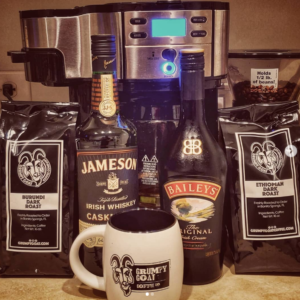
To start, add the Irish Whiskey to your mug. Then pour your freshly brewed hot Grumpy Goat coffee. Top it off with a generous shot of Bailey’s Irish Cream. Sip and enjoy!
Grumpy Goat Coffee Company, a microroaster of gourmet grade, single origin coffee is celebrating National Coffee Day, Sunday, September 29, by announcing they are under contract to expand their roasting operations with a location in Bonita Springs. Grumpy Goat’s roastery will be in close proximity to historic downtown Bonita Springs and is expected to be open in late 2019.
In addition to housing its roasting operations, Grumpy Goat’s facility will feature a tasting room, offer coffee roasting classes, special events and be a new option for customers to pick-up their orders of fresh roasted coffee beans.
“Our roastery will help us fulfill our mission to make freshly roasted, single-origin, fully traceable gourmet grade coffee both exciting and approachable for everyone,” said Brian Abernathy, master roaster and founder of Grumpy Goat Coffee. ”Fully traceable means that I know where the beans are coming from. I know when they are harvested, when they’re sent to the washing station, when they’re set afloat.”
Similar to wines, coffee is graded on a 100 point system by professional cuppers. Grumpy Goat is committed to only selecting coffee beans rated 86 points or higher which is considered gourmet grade.
Abernathy added, “I know if they have certifications like USDA certified organic, Fair Trade Organic or Women Produced. In terms of single origin, it’s a lot like wine. I know the regions, I know the altitudes, I know the varietals that make up the coffee I bring in.”
Understanding the various labels and logos on your gourmet coffee package can be confusing. It’s ironic because the purpose of these symbols is to make it easier to identify coffee and other products that you can trust. Each image tries to tell you something about how the coffee was grown.
Packages of coffee you encounter may display one or more of a variety of badges or seals. Each symbol has a message. However, some are more meaningful but others are more for marketing purposes.
Fairtrade Certified
Coffee packages displaying a Fairtrade badge means that coffee farmers and the producer groups they belong to are paid a minimum fairtrade price for their coffee to cover production costs.
Coffee is an unpredictable crop from season to season depending upon weather. Therefore, Fairtrade helps farmers sustain a more stable income stream, especially in developing countries.
In addition, a portion of the fairtrade revenue earned by the farmers is reinvested in production facility and community improvements.
Fairtrade International is probably the most well known fair trade label worldwide.
Fair Trade USA
Similar to Fairtrade International, Fair Trade USA is an independent, nonprofit organization. This group certifies and labels products that adhere to standards for sustainable livelihoods for farmers and works to protect the environment.
Coffee is the most popular fair trade product. However, Fair Trade USA also certifies several other commodities such as tea.
Fair Trade organization (FTO) and
Fair Trade Organic (FTO)
Organizations focused on Fair Trade organizations (FTOs) abide by the Fair Trade principles. They are vocal advocates of producers. Also, FTOs raise awareness of Fair Trade issues. They actively work toward adherence to Fair Trade principles across all international trade practices.
As the global certification body for Fairtrade, FLOCERT is on a mission to assure fairness. They support companies in sourcing on Fairtrade principles, where no Fairtrade Standard applies. Also, FLOCERT helps producers, traders and brands build fair supply chains around the world.
Women Coffee Producers
According to Cafe Imports, “as much as 70 percent of labor on coffee farms—planting, picking, processing, sorting—is done by women, though women’s legal representation as land owners and association members is distinctly lower,” ranging from only 5-20 percent.
The Women Coffee Producers program intends to raise awareness of gender inequity and inequality issues in coffee-producing countries. In addition, the program financially empowers women growers. Coffee packages bearing a label referring to women producers are sourced from women in associations and cooperatives. This means a gender-equity premium is paid on top of the quality-based initial price of their coffee.
For example, in Mexico the population involved in coffee is more than 500,000 families. There is a growing percentage of women producers. Many of the women own or have inherited coffee farms. Purchasing coffee rewards women’s contributions. Buyers pay a premium to the women who contribute to the production. In turn, this premium is invested in projects within their communities and for the families.
Organic
It is possible for a product to bear a label “Made With Organic Ingredients.” However, this does not qualify it to use the USDA Organic Seal (explained further below).
In this case up to 30 percent of agricultural or other allowable ingredients can be non-organic.
USDA Organic
An organic label is just a label. The USDA Organic Seal is a privilege of certified products. The United States Department of Agriculture governs this labeling term.
It refers to an agricultural product produced in accordance with the The Organic Foods Production Act of 1990. The USDA organic regulations cover four categories of products. Categories include crops, livestock, processed products and wild crops
To earn the right to display the USDA Organic seal, producers must abide by strict rules. Examples of these rules include sanitation, commingling and contact with non-organic products, pest, weed, and disease controls, soil fertility and much more.
Even if a product is certified organic in its country of origin it is recertified upon entry into the United States to ensure it meets USDA standards.
“Rainforest Alliance Certified” or “Bird Friendly”
Both “Bird Friendly” and “Rainforest Alliance Certified” seals inform consumers that the coffee maintains some habitat for birds. However, the Bird Friendly designation is a higher standard as established by scientists at the Smithsonian Migratory Bird Center.
These certifications require farmers to maintain or restore a sufficient amount of canopy cover. This cover approximates a “forest-like” environment. In addition, these designations prohibit harmful pesticides, which limit prey for birds.
Shade Grown
When you see a “shade-grown” label on a package of coffee it can refer to a variety of growing conditions that are conducive to protecting migratory songbirds.
Deforestation is presenting an ecological disruption in some coffee growing regions. As a result, shade-coffee farms established within areas with a natural forest canopy are diminishing.
This trend is affecting several species of North American birds. This means they now have fewer options of places to migrate for the winter.













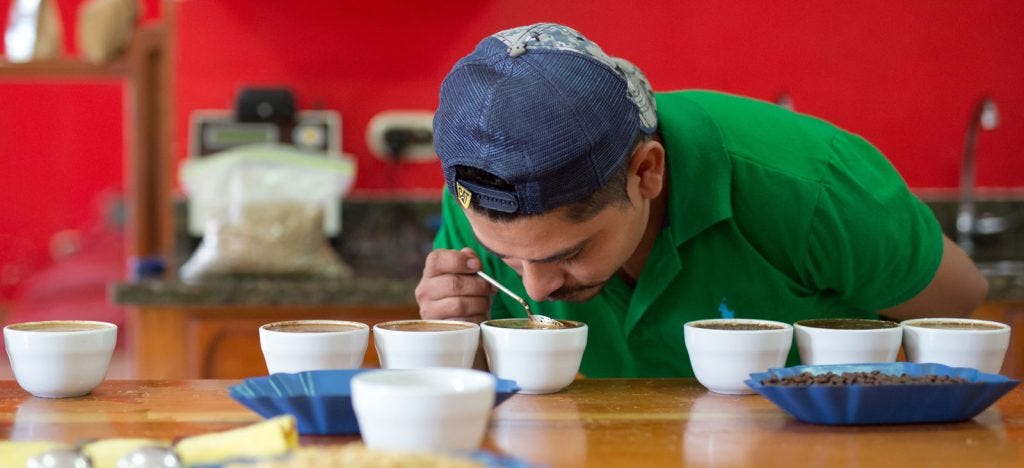

 A good coffee cupping experience will include at least three or four single origin coffees. But if you are feeling more adventurous you can certainly expand that number. Generally, you can cup six samples with a single tea kettle.
 The first part of your coffee cupping evaluation is the sniff the aroma of the dry coffee grinds.
 It’s Time to Taste the Coffee

 There are several transformative community improvement projects that are underwritten from the premium revenues generated by Ugandan Gorilla Summit Coffee.
 The volcanic soils of the Bwindi mountains that rise high above Lake Victoria give the unique tasting notes to the Ugandan coffee varieties.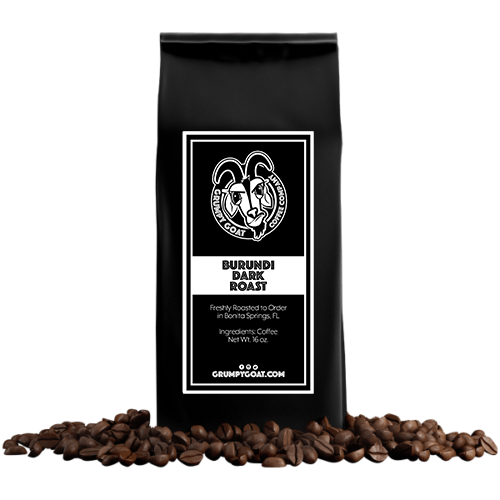
 The six ounce option is available in any of the 14 origins available. Coffee beans can be ordered in either medium or dark roast. Customers may select either whole beans or request them ground for any brew method.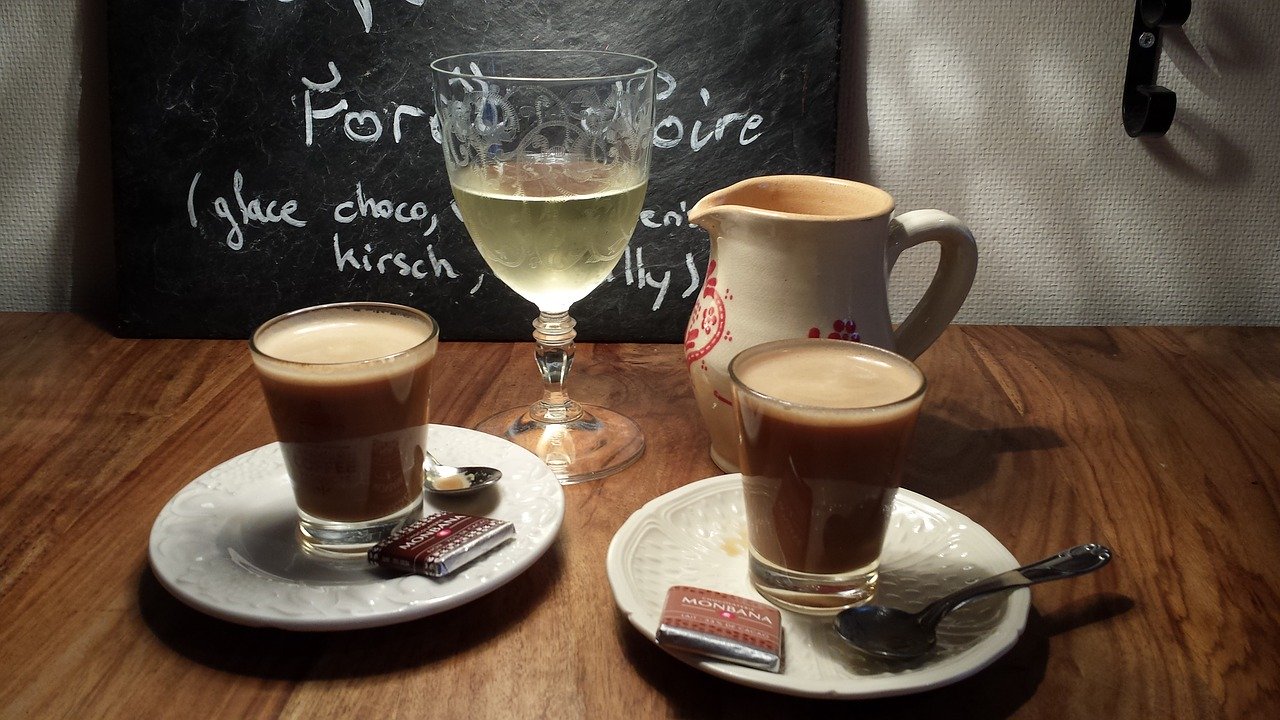





 Coffee packages displaying a Fairtrade badge means that coffee farmers and the producer groups they belong to are paid a minimum fairtrade price for their coffee to cover production costs.
 Similar to Fairtrade International, Fair Trade USA is an independent, nonprofit organization. This group certifies and labels products that adhere to standards for sustainable livelihoods for farmers and works to protect the environment.
 Organizations focused on Fair Trade organizations (FTOs) abide by the Fair Trade principles. They are vocal advocates of producers. Also, FTOs raise awareness of Fair Trade issues. They actively work toward adherence to Fair Trade principles across all international trade practices.
 According to Cafe Imports, “as much as 70 percent of labor on coffee farms—planting, picking, processing, sorting—is done by women, though women’s legal representation as land owners and association members is distinctly lower,” ranging from only 5-20 percent.
 It is possible for a product to bear a label “Made With Organic Ingredients.” However, this does not qualify it to use the USDA Organic Seal (explained further below).
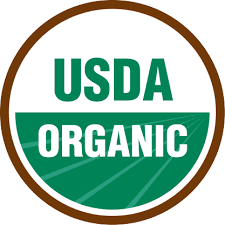 An organic label is just a label. The USDA Organic Seal is a privilege of certified products. The United States Department of Agriculture governs this labeling term.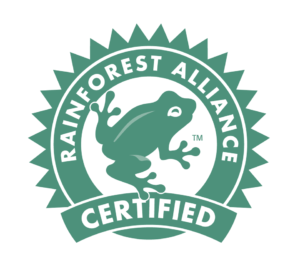

 When you see a “shade-grown” label on a package of coffee it can refer to a variety of growing conditions that are conducive to protecting migratory songbirds.