Category: Region

Region

  • Anaerobic Coffee Processing: A Deep Dive for Grumpy Goat Coffee Drinkers

    Anaerobic Coffee Processing: A Deep Dive for Grumpy Goat Coffee Drinkers

    [fusion_builder_container type=”legacy” hundred_percent=”no” hundred_percent_height=”no” hundred_percent_height_scroll=”no” align_content=”stretch” flex_align_items=”flex-start” flex_justify_content=”flex-start” hundred_percent_height_center_content=”yes” equal_height_columns=”no” container_tag=”div” hide_on_mobile=”small-visibility,medium-visibility,large-visibility” status=”published” border_style=”solid” padding_top=”25px” box_shadow=”no” box_shadow_blur=”0″ box_shadow_spread=”0″ gradient_start_position=”0″ gradient_end_position=”100″ gradient_type=”linear” radial_direction=”center center” linear_angle=”180″ background_position=”center center” background_repeat=”no-repeat” fade=”no” background_parallax=”none” enable_mobile=”no” parallax_speed=”0.3″ background_blend_mode=”none” video_aspect_ratio=”16:9″ video_loop=”yes” video_mute=”yes” absolute=”off” absolute_devices=”small,medium,large” sticky=”off” sticky_devices=”small-visibility,medium-visibility,large-visibility” sticky_transition_offset=”0″ scroll_offset=”0″ animation_direction=”left” animation_speed=”0.3″ filter_hue=”0″ filter_saturation=”100″ filter_brightness=”100″ filter_contrast=”100″ filter_invert=”0″ filter_sepia=”0″ filter_opacity=”100″ filter_blur=”0″ filter_hue_hover=”0″ filter_saturation_hover=”100″ filter_brightness_hover=”100″ filter_contrast_hover=”100″ filter_invert_hover=”0″ filter_sepia_hover=”0″ filter_opacity_hover=”100″ filter_blur_hover=”0″][fusion_builder_row][fusion_builder_column type=”1_1″ layout=”1_1″ background_position=”left top” background_color=”” border_color=”” border_style=”solid” border_position=”all” spacing=”yes” background_image=”” background_repeat=”no-repeat” padding_top=”” padding_right=”” padding_bottom=”” padding_left=”” margin_top=”0px” margin_bottom=”0px” class=”” id=”” animation_type=”” animation_speed=”0.3″ animation_direction=”left” hide_on_mobile=”small-visibility,medium-visibility,large-visibility” center_content=”no” last=”true” min_height=”” hover_type=”none” link=”” border_sizes_top=”” border_sizes_bottom=”” border_sizes_left=”” border_sizes_right=”” first=”true”][fusion_text columns=”” column_min_width=”” column_spacing=”” rule_style=”default” rule_size=”” rule_color=”” content_alignment_medium=”” content_alignment_small=”” content_alignment=”” hide_on_mobile=”small-visibility,medium-visibility,large-visibility” sticky_display=”normal,sticky” class=”” id=”” font_size=”” line_height=”” letter_spacing=”” text_color=”” animation_type=”” animation_direction=”left” animation_speed=”0.3″ animation_offset=””]
    anaerobic coffee processingAnaerobic Coffee Processing: A Deep Dive for Grumpy Goat Coffee Drinkers


    Anaerobic processing has rapidly moved from coffee competitions into the cups of everyday specialty drinkers — and here at Grumpy Goat Coffee, it’s become one of the most exciting categories we roast when harvest cycles allow. While our inventory shifts from season to season, we’ve featured standout anaerobic coffees from Ecuador (Juan Peña / Hacienda La Papaya), Brazil (Fazenda Vassourão), Uganda Gorilla Summit, Burundi, El Salvador, and India (Ratnagiri Estate), offering Southwest Florida coffee lovers a chance to taste fermentation-driven flavors unlike anything in traditional washed or natural coffees.

    This expanded guide explains what anaerobic processing is, explores various fermentation techniques (including honey variations and yeast-driven methods), highlights regions around the world known for these innovations, and includes internal links to help you continue exploring the world of specialty coffee on grumpygoat.com.

    What Makes Anaerobic Coffee Different?

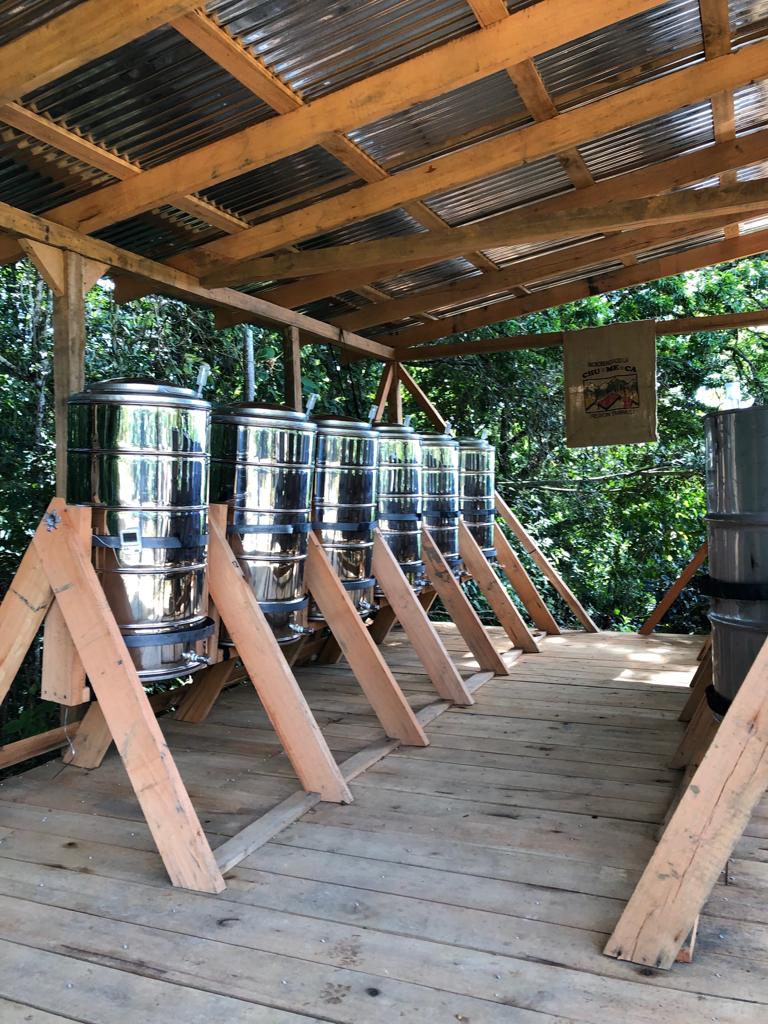
    In simple terms, anaerobic means fermented without oxygen. Instead of leaving coffee cherries or depulped seeds exposed to the air, farmers seal them in tanks, barrels, or bags that limit or eliminate oxygen.

    Inside these sealed vessels, naturally occurring yeasts and bacteria break down sugars in the fruit, releasing CO₂, heat, and a wide range of flavor-building compounds. The result is coffee with a flavor intensity and aromatic complexity that can include:

    •       Tropical fruit
    •       Berry-like acidity
    •       Lactic or creamy notes
    •       Wine-like aromatics
    •       Spices, florals, or dessert-like qualities

    Because anaerobic fermentation is a fermentation technique rather than a primary processing method, coffee farmers can apply it to washed, natural, or honey processes.

    If you’re new to specialty processing, you can also explore our article,

     ▶️ What Makes Fresh-Roasted Coffee Different?

    Anaerobic + Honey Processing (Yellow, Red & Black Honey)

    Honey processing sits between washed and natural. The cherries are depulped, but the sticky mucilage is left on the seeds to dry. Variations depend on how much mucilage remains and how slowly the coffee dries:

    •       Yellow Honey – Less mucilage, quicker drying, gentle fruit sweetness
    •       Red Honey – More mucilage, slower drying, richer fruit character
    •       Black Honey – Most mucilage, slowest drying, dense sweetness and deep fruit intensity

    When coffee producers combine these stages with anaerobic fermentation, they first seal the mucilage-covered beans in tanks, then finish drying them according to the honey style. This layering amplifies sweetness and complexity with refined control.

    While Costa Rica, Panama, and Brazil are widely known for honey innovations, these practices are now being used in other countries such as Burundi, El Salvador, India and with the list continuously growing. 

    Anaerobic Natural Processing

    In an anaerobic natural process, whole coffee cherries are sealed in an oxygen-poor environment before being dried in the sun. This technique prevents uncontrolled microbial activity and instead encourages desirable flavors to flourish.

    Cup characteristics usually include:

    •       Strong berry or tropical fruit notes
    •       Wine-like aromatics
    •       Heavy body and syrupy sweetness

    Anaerobic natural coffees are especially prominent in Colombia, Brazil, Costa Rica, Panama, and increasingly in Ethiopia.

    Anaerobic Washed Processing

    Anaerobic washed coffees are fermented in sealed tanks, either as whole cherries or as depulped parchment, before the mucilage is washed off. This technique preserves acidity and structure while still layering in complex fermentation notes.

    Expect:

    •       Bright, sparkling acidity
    •       Clean structure with elevated fruit
    •       A balance between clarity and complexity

    Carbonic Maceration — Including India’s Ratnagiri Estate

    Carbonic maceration (CM) is one of the most advanced and distinctive fermentation methods. Borrowed from the wine world, this technique places whole cherries in a sealed tank that is flushed or filled with carbon dioxide. With no oxygen available, fermentation happens inside the intact cherry — intensifying fruit flavors and developing delicate aromatics.

    Typical flavor traits include:

    •       Deep florals
    •       Saturated tropical fruit
    •       Silky or creamy texture
    •       Lactic, wine-like acidity

    Spotlight: India’s Ratnagiri Estate

    One of the most exciting producers exploring CM is Ratnagiri Estate in India’s Western Ghats. Their carbonic maceration lots have gained global recognition for delivering:

    •       Guava, mango, and papaya-like fruit
    •       Naturally sweet, almost dessert-like flavor profiles
    •       Remarkably clean yet adventurous fermentation notes

    Grumpy Goat Coffee has proudly roasted anaerobic microlots from India, including experimental styles from Ratnagiri, when available in our seasonal lineup.

    To learn more about how origin shapes flavor, visit:

     ▶️ Grumpy Goat Coffee Origins & Story

    Selected Yeast & “Carbonic Yeast” Fermentation

    Yeast-inoculated fermentation introduces carefully selected yeast strains into sealed tanks. Instead of relying solely on native microbes, producers can precisely steer flavor development.

    These coffees often show:

    •       Highly expressive fruit
    •       Floral or perfumy aromatics
    •       Elevated consistency across batches

    Some of the most refined yeast-processed coffees we’ve roasted come from experimental farms in Ecuador, including renowned producer Juan Peña, whose lots often showcase jasmine, candied fruit, and long, clean sweetness.

    Emerging Variations in Anaerobic Processing

    Because anaerobic methods are flexible and experimental, a growing number of hybrids are appearing:

    •       Double Anaerobic / Double Fermentation
    •       SIAF (Self-Induced Anaerobic Fermentation)
    •       Anaerobic Honey with Added Fruit Must or Aromatics
    •       Extended-fermentation naturals with scoped temperature and pH curves

    These experimental styles are especially common in Colombia, Panama, El Salvador, and India — all regions that have appeared on Grumpy Goat’s roasting calendar.

    Regions Leading Anaerobic Innovation

    While any coffee origin can implement anaerobic techniques, several countries have become recognized leaders:

    Colombia

    A global epicenter of experimental processing. Many of the most complex anaerobic naturals and CM lots come from Colombian microlots.

    Costa Rica

    Pioneers of honey processing and micromill innovation, producing some of the most refined anaerobic honey coffees.

    Panama

    Competition-level Gesha farms lead the world in precision fermentation.

    Brazil

    Large estates like Fazenda Vassourão are pushing anaerobic naturals, CM, and SIAF techniques further each year.

    India

    The Ratnagiri Estate and other progressive farms are making India a new powerhouse in fermentation-driven specialty coffee.

    Uganda, Burundi & El Salvador

    Producers here are using anaerobic processing to elevate microlots and distinguish regional profiles.

    How Anaerobic Coffees Taste — and How to Brew Them

    Anaerobic coffees can be bold, juicy, and layered — but they often benefit from careful brewing:

    Brewing Tips

    •       Lower water temperature (194–199°F) helps preserve aromatics
    •       Slightly coarser grind reduces intensity if fermentation notes feel heavy
    •       Try bypass or dilution on pourovers for clarity
    •       Make minor grind adjustments for different anaerobic styles

    For more brewing resources, check out:

     ▶️ How to Choose the Best Coffee for Your Taste

    Why Grumpy Goat Roasts Anaerobic Coffees (When Available)

    As a small-batch craft roastery in Bonita Springs, we choose anaerobic coffees because they:

    •       Tell powerful, origin-driven stories
    •       Showcase farm-level innovation
    •       Deliver unique, unforgettable flavor experiences
    •       Offer our customers something rare and ever-evolving

    Because these coffees depend heavily on harvest conditions and tiny microlot availability, we cannot stock them year-round. But when they appear on our menu — whether from Ecuador, Brazil, Uganda, India, or beyond — they represent some of the most expressive and unique coffees we roast.

    [/fusion_text][/fusion_builder_column][/fusion_builder_row][/fusion_builder_container]

  • Take the trip of a lifetime to your favorite coffee producing country – Cirrí Sur, Naranjo Costa Rica

    Take the trip of a lifetime to your favorite coffee producing country – Cirrí Sur, Naranjo Costa Rica

    [fusion_builder_container hundred_percent=”no” equal_height_columns=”no” menu_anchor=”” hide_on_mobile=”small-visibility,medium-visibility,large-visibility” class=”” id=”” background_color=”” background_image=”” background_position=”center center” background_repeat=”no-repeat” fade=”no” background_parallax=”none” parallax_speed=”0.3″ video_mp4=”” video_webm=”” video_ogv=”” video_url=”” video_aspect_ratio=”16:9″ video_loop=”yes” video_mute=”yes” overlay_color=”” video_preview_image=”” border_color=”” border_style=”solid” padding_top=”” padding_bottom=”” padding_left=”” padding_right=”” type=”legacy”][fusion_builder_row][fusion_builder_column type=”1_1″ layout=”1_1″ background_position=”left top” background_color=”” border_color=”” border_style=”solid” border_position=”all” spacing=”yes” background_image=”” background_repeat=”no-repeat” padding_top=”” padding_right=”” padding_bottom=”” padding_left=”” margin_top=”0px” margin_bottom=”0px” class=”” id=”” animation_type=”” animation_speed=”0.3″ animation_direction=”left” hide_on_mobile=”small-visibility,medium-visibility,large-visibility” center_content=”no” last=”true” min_height=”” hover_type=”none” link=”” border_sizes_top=”” border_sizes_bottom=”” border_sizes_left=”” border_sizes_right=”” type=”1_1″ first=”true”][fusion_text columns=”” column_min_width=”” column_spacing=”” rule_style=”default” rule_size=”” rule_color=”” content_alignment_medium=”” content_alignment_small=”” content_alignment=”” hide_on_mobile=”small-visibility,medium-visibility,large-visibility” sticky_display=”normal,sticky” class=”” id=”” font_size=”” line_height=”” letter_spacing=”” text_color=”” animation_type=”” animation_direction=”left” animation_speed=”0.3″ animation_offset=””]Come with me to Cirri Sur Costa Rica!

    Take the trip of a lifetime to your favorite coffee producing country – Cirrí Sur, Naranjo Costa Rica

    Buckle up grumpies, because today we are taking a trip to Costa Rica! All you need is a fresh hot cup of Grumpy Goat Costa Rican Coffee and we’re off!

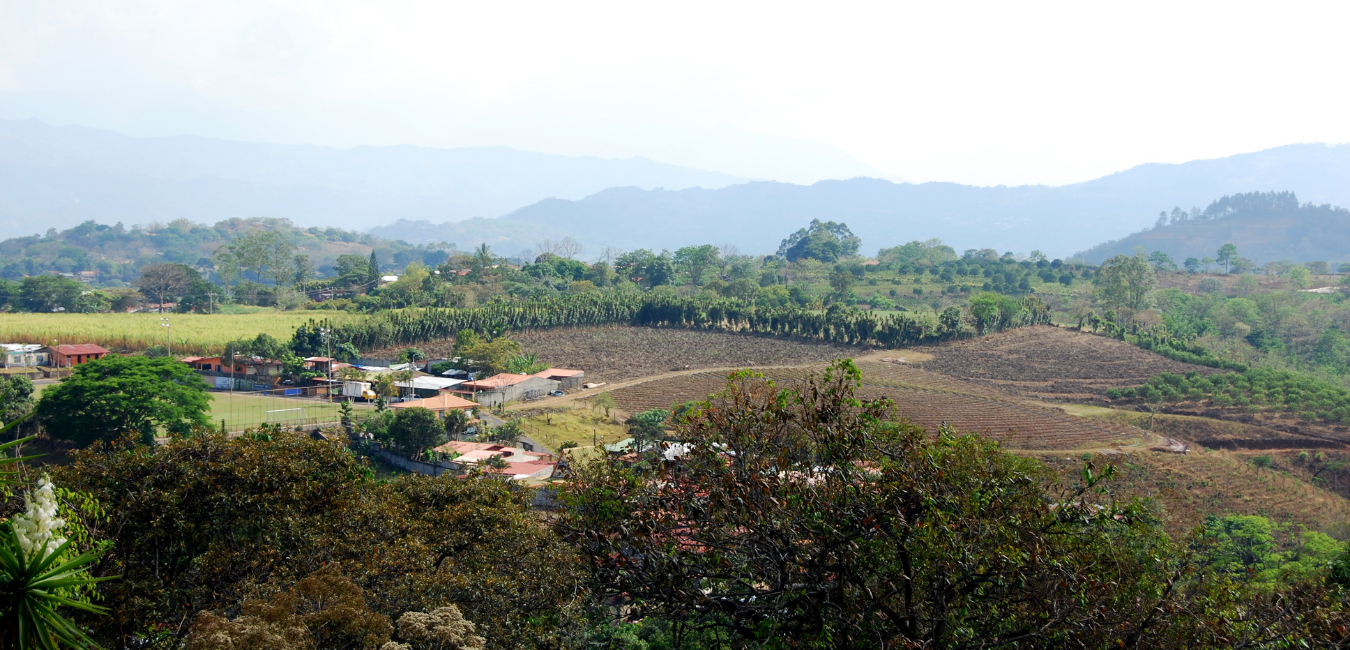
    Located at the heart of Costa Rica in the quaint province of Alajuela is Cirrí Sur of the Naranjo canton. Also known as one of the world’s most famous coffee-producing regions. While Costa Rica is known for its beautiful sandy beaches and thriving cities, the true Costa Rica experience comes from the quaint coffee-producing towns and provinces.

    Most people wouldn’t think to plan a trip to Costa Rica just for some coffee. However, coffee plays such a huge role in Costa Rica’s economy, culture, and history that excluding it from your itinerary will make your trip incomplete. 

    A brief history of how coffee became the backbone of Costa Rica’s economy

    Costa Rica was first exposed to coffee in the 1700s when settlers arrived. Due to the perfect weather conditions, the plant was able to take root almost instantly and eventually spread across the vast Costa Rican mountains.

    This quickly led to a booming economy for Costa Rica and a specialty that no surrounding countries had at the time. In fact, Costa Rica was the first country in the area to dip its toes into the coffee industry. 

    Mountains in Costa Rica - Grumpy Goat

    Since coffee is at the center of the Costa Rican economy, it’s also at the center of their culture. While there are many things that can divide individuals, coffee is certainly not one of them. Coffee in Costa Rica is a staple to their culture and their roots. No matter what someone’s social class or occupation is, a cup of coffee is enjoyed by every citizen that calls Costa Rica home.

    Coffee first, then everything else – the different ways to process coffee crops in Costa Rica

    Harvesting and processing coffee crops is no easy task. There are several ways to process a coffee crop, but Costa Rica has the science down to a tee. 

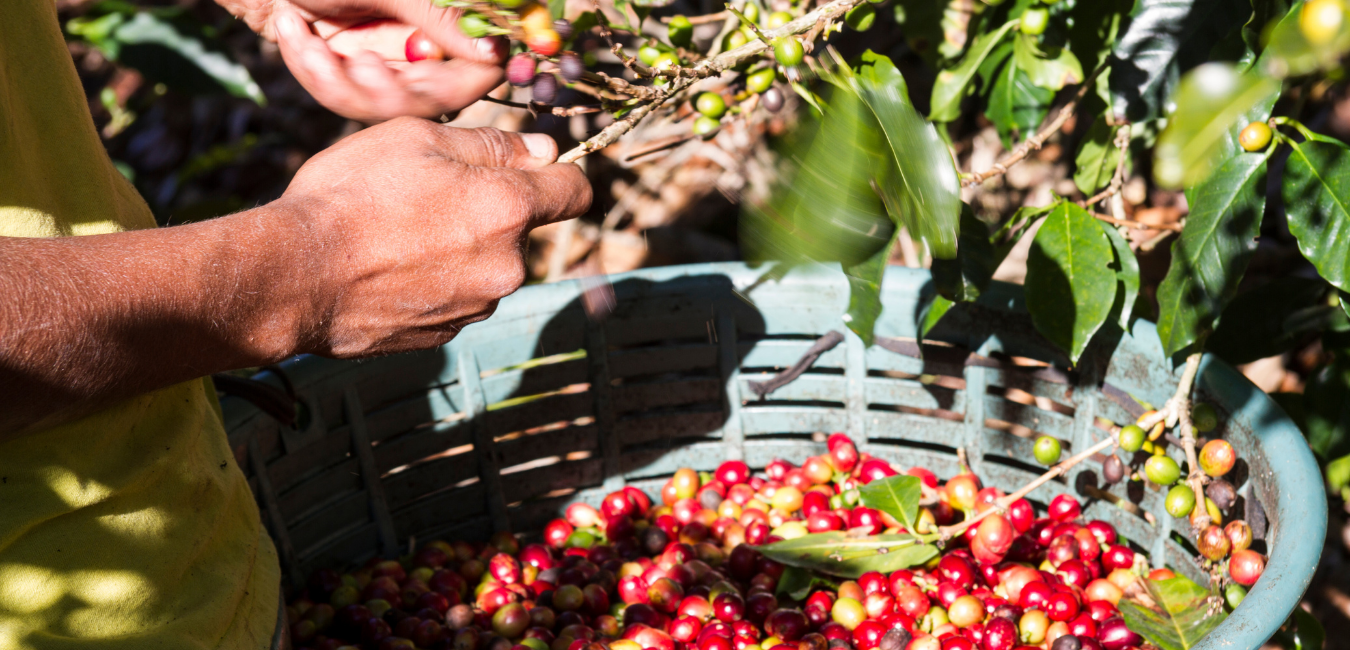
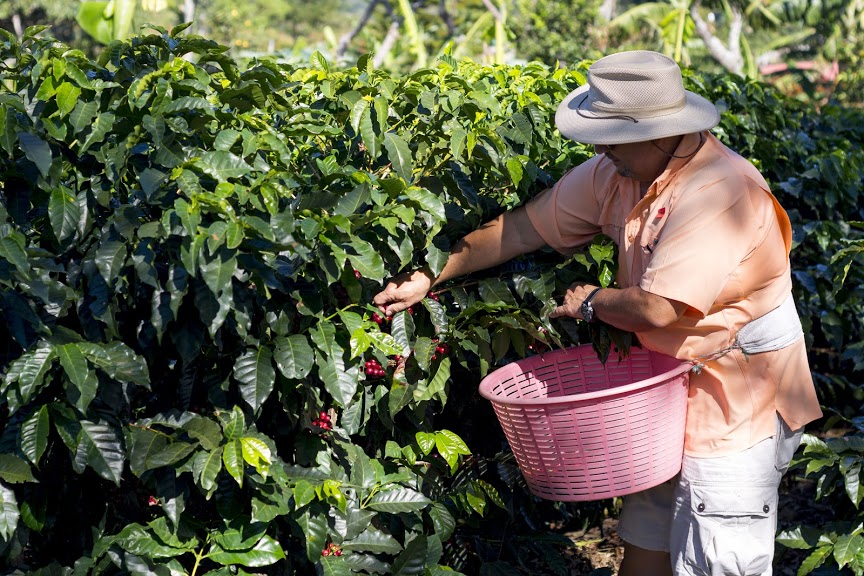
    Harvesting Coffee Beans in Costa Rica - Grumpy Goat

    • The Natural Process: In this type of process, the mature coffee bean (aka a cherry) is dried to separate the pulp from the seed. By utilizing this process, a unique flavor is created. Not to mention it reduces the amount of money spent to process the bean!
    • The Washed Process: Through this process, the coffee cherries are sent to a wet mill, and high-pressure water strips the pulp away from the seed. The majority of coffee crops use this method.
    • The Honey Process: This is often seen as a middle ground between the washed process and the natural process. This technique initially removes part of the fruit from the coffee beans and then the rest is left to dry and fall away from the bean over time.

    How do you know which process produces the best flavor profile for you? Well, there’s only one way to find out… 

    Experience love at first sip – Alajuela Costa Rica coffee tours that are calling your name

    Just like visiting the beautiful white beaches while in Costa Rica is a must, so is signing up for some coffee tours. It’s truly an experience like no other. Not only do you get to watch the entire process and meet the hard-working families that have made this their lively hood, but you also get to drink pure, full-bodied coffee with beautiful scenery. It doesn’t get much better than that!

    Here is a list we have compiled of the best coffee tours to go on in the Alajuela province:

    Doka Estate - Harvesting - Grumpy Goat

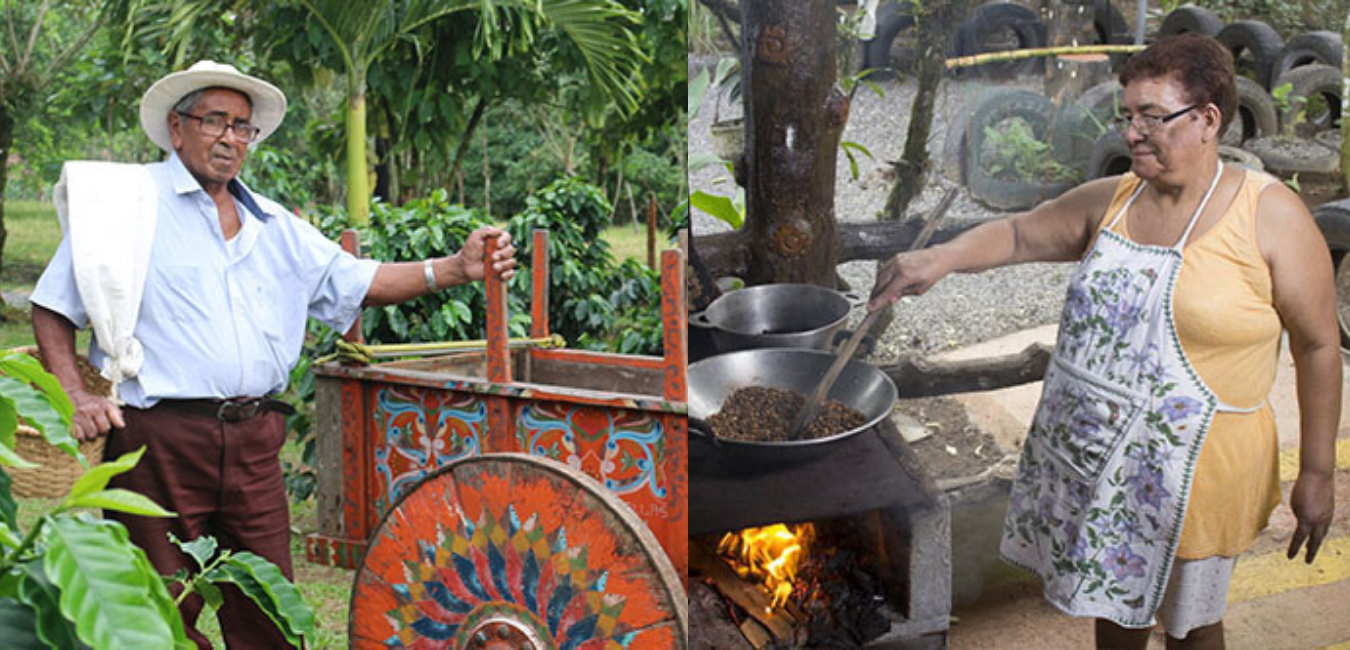
    When going on a Doka Estate Coffee Tour, you certainly get what you pay for! The tour takes you through the extensive process from planting the tree, to picking the cherries, roasting the beans, and making a hot cup of coffee the Costa Rican way. 

    Learn more about the history, the culture, and the impact of coffee on the people of Costa Rica. And most importantly – enjoy some great laughs, with great people and great coffee.

    • North Field Cafe: Craft Specialty Coffee and Chocolate Tour: who doesn’t love coffee and chocolate?! Experience the best of both worlds by going on a coffee and chocolate tour on the slopes of Volcano Arenal, La Fortuna, and San Carlos.

    Family harvesting in costa rica - Grumpy Goat Coffee

    Located about two hours from Cirrí Sur, the North Field Cafe Tours allow you to genuinely experience all that Costa Rica is. Coffee and chocolate are strong pillars in Costa Rica’s economy and North Field Cafe Tours bring you up close and personal to some of the most fundamental aspects of their society.

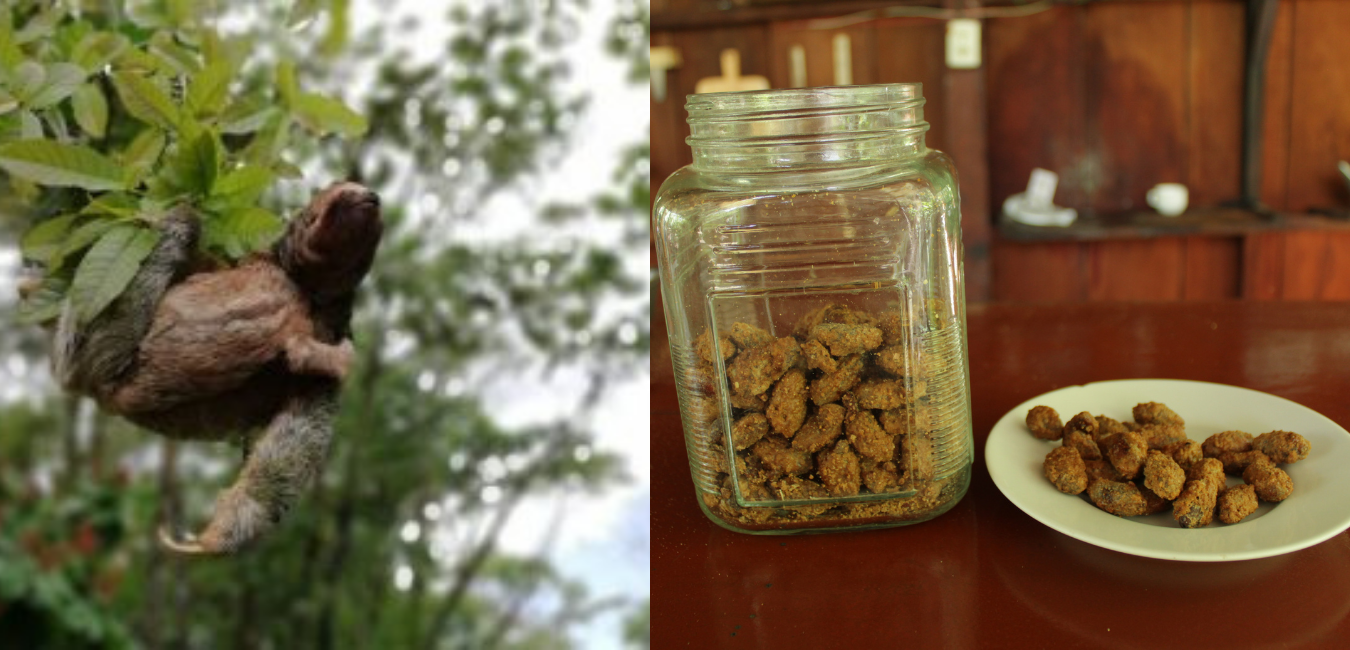
    • Sloth Coffee and Chocolate Tour: Bet you thought it couldn’t get any better than a coffee and chocolate tour?! This one-of-a-kind coffee tour allows you to relish the history of Costa Rican coffee and chocolate while simultaneously hanging out with some cool sloths! The only thing missing is some Grumpy Goats!

    Sloths and coffee - Grumpy Goat Coffee Company

    Located in the province of Alajuela about 2 hours from Cirrí Sur is the Arenal Jungle Tours. Experience coffee prepared the way that the ancestors of Costa Rica intended and go on a guided tour that allows you to experience the beautiful landscape of Costa Rica.

    Don’t get us wrong, while you’re in Costa Rica you should definitely do all of the things a typical tourist would do. Go to San Jose, visit the Paos Volcano, go zip lining, get some really bad tan lines on the beach or maybe even go out on a safari! But you would surely miss out if you didn’t allow yourself to indulge deeper into the roots of Costa Rica by experiencing their true culture – coffee.

    And hey, maybe a trip to Costa Rica isn’t in the budget for this year, but you know what the second best thing is? Our very own Grumpy Goat Costa Rican Coffee harvested in – you guessed it – Cirrí Sur, Naranjo! You may not be able to go to Costa Rica but at least you can brew a fresh cup of Grumpy Goat, read this blog and pretend like you’re enjoying a nice rainforest coffee tour surrounded by sloths. We can dream, can’t we?[/fusion_text][/fusion_builder_column][/fusion_builder_row][/fusion_builder_container]
  • Ugandan Gorilla Summit Coffee – Lifting Families out of Poverty

    Ugandan Gorilla Summit Coffee – Lifting Families out of Poverty

    [fusion_builder_container hundred_percent=”no” equal_height_columns=”no” menu_anchor=”” hide_on_mobile=”small-visibility,medium-visibility,large-visibility” class=”” id=”” background_color=”” background_image=”” background_position=”center center” background_repeat=”no-repeat” fade=”no” background_parallax=”none” parallax_speed=”0.3″ video_mp4=”” video_webm=”” video_ogv=”” video_url=”” video_aspect_ratio=”16:9″ video_loop=”yes” video_mute=”yes” overlay_color=”” video_preview_image=”” border_color=”” border_style=”solid” padding_top=”” padding_bottom=”” padding_left=”” padding_right=”” type=”legacy”][fusion_builder_row][fusion_builder_column type=”1_1″ layout=”1_1″ background_position=”left top” background_color=”” border_color=”” border_style=”solid” border_position=”all” spacing=”yes” background_image=”” background_repeat=”no-repeat” padding_top=”” padding_right=”” padding_bottom=”” padding_left=”” margin_top=”0px” margin_bottom=”0px” class=”” id=”” animation_type=”” animation_speed=”0.3″ animation_direction=”left” hide_on_mobile=”small-visibility,medium-visibility,large-visibility” center_content=”no” last=”true” min_height=”” hover_type=”none” link=”” border_sizes_top=”” border_sizes_bottom=”” border_sizes_left=”” border_sizes_right=”” first=”true” type=”1_1″][fusion_text columns=”” column_min_width=”” column_spacing=”” rule_style=”default” rule_size=”” rule_color=”” content_alignment_medium=”” content_alignment_small=”” content_alignment=”” hide_on_mobile=”small-visibility,medium-visibility,large-visibility” sticky_display=”normal,sticky” class=”” id=”” font_size=”” line_height=”” letter_spacing=”” text_color=”” animation_type=”” animation_direction=”left” animation_speed=”0.3″ animation_offset=””]

    Ugandan Gorilla Summit Coffee – Lifting Families out of Poverty

    Historically, hundreds of Ugandan small holder farmers supplied lower quality robusta coffee to the world but Gorilla Summit Coffee is working to change that.

    In recent years, successful efforts have been made to develop a high quality, specialty arabica coffee industry.  New partnerships with premier coffee roasters and distributors around the world (like Grumpy Goat Coffee) have been established.

    Grumpy Goat Coffee is excited to share the story behind Ugandan Gorilla Summit Coffee.

    map of african coffee growing regions uganda tanzania rwanda, dr congo, burundi

    How to Order Ugandan Gorilla Summit Coffee

    The specialty coffee is in limited supply but here’s how you can claim yours.

    Gorilla Summit coffee can be ordered via our online store or picked up locally in our Bonita Springs coffee roastery.

    If you are not yet receiving email alerts from Grumpy Goat click here to signup.

    Introducing Ugandan Gorilla Summit Coffee

    Gorilla Summit Coffee is a project started in 2012 by Gerald K. Mbabazi.  The singular goal is to help coffee farmers earn more income.

    The program kicked-off in Kanugu, a west Ugandan village.

    Traditionally the coffee farmers there were only able to produce lower quality coffee which resulted being paid ridiculously low prices—sometimes less than $0.05 per pound.

    Through the skill building offered by Mr. Mbabzi’s Gorilla Summit Coffee program, farmers improved their growing and harvesting techniques.

    They also constructed their own coffee cherry processing station and implemented more modern equipment.  These steps help Ugandan farmers produce higher-quality coffee.

    In fact, they have achieved cupping scores well into the specialty coffee range (85 points or higher), adding internationally recognized credibility.

    Better quality has led to premium prices being paid. This has resulted in the doubling of incomes for these otherwise vulnerable families. The quality of life of more than 1,800 coffee farmers and their families is improved with every crop, every bag, and every cup of coffee we enjoy.

    Community Benefits Thanks to Ugandan Gorilla Summit Coffee

    Ugandan Gorilla Summit Coffee wash stationThere are several transformative community improvement projects that are underwritten from the premium revenues generated by Ugandan Gorilla Summit Coffee.

    Clean Water

    We take clean water for granted in the United States. But in many developing areas of the world, clean well is difficult to access.  The premium prices earned by Ugandan Gorilla Summit coffee farmers help the community build new clean water wells.  This improves the quality of life for everyone.

    Education

    Leaving the world a better place for our children is a goal each generation pursues. Education is one path by which people can improve the economic opportunities available to them. The Ugandan Gorilla Summit Coffee program has resulted in training programs for farmers. In addition, there are new opportunities for children by building schools, even one accredited university.

    Economic Diversification

    Increased revenues from selling high quality coffee allows Uganda farmers to reinvest in other farming strategies such as raising livestock such as chickens. Small scale egg production is another benefit.

    Health Care

    Imagine not having access to a medical professional during a complicated pregnancy.  The Ugandan Gorilla Summit program generates monies that are used to build maternity clinics in remote areas. These are so essential as mothers have no access to hospital care and many of the babies die due to inadequate birthing facilities and professional care.

    Give-a-Goat Campaign

    Selected farmers from the program were granted goats. Then when each new baby goat is born, it’s paid forward to a neighboring farmer at no cost. As a result, an ecosystem of small-scale goat farming has been set-up. This opens new income streams for the smallholder farmers.

    Solar Energy

    Electricity is yet another thing we take for granted in the United States but is less common in developing regions of the world. Thanks to the Ugandan Gorilla Summit Coffee program, the participating growers have the opportunity to purchase solar lamps for their homes. Children can do their school work at night using safe light rather than kerosene which is dangerous to breathe.

    Mosquito Nets

    The most effective means of preventing malaria is sleeping under a mosquito net. Malaria is transmitted by certain mosquitoes when they bite. The extra revenues generated by Ugandan Gorilla Summit Coffee farmers are used to purchase mosquito nets to protect coffee growers families.

    Think about it.

    For every bag of coffee you purchase, a child is able to go to school.

    For every cup of coffee you enjoy, a mother is able to afford a hospital bill.

    For every sip of the gorilla summit coffee, you help lift families out of poverty.

    Ugandan Gorilla Summit Coffee Tasting Notes

    Ugandan Gorilla Summit Coffee available from Grumpy Goat CoffeeThe volcanic soils of the Bwindi mountains that rise high above Lake Victoria give the unique tasting notes to the Ugandan coffee varieties.

    The common tasting notes of this region’s coffee include raisins, black cherries and dark chocolate. Recent harvests are described as sweet and heavy with tart fruit acidity, cocoa, coffee and mild berry flavors. But tasting notes can change from season to season and harvest to harvest.

    These coffees are grown in an area near Bwindi Impenetrable National Park and forest, a protected primeval forest that reaches elevations up to 2,600 meters.

    More About Ugandan Gorilla Summit Coffee

    One of the more heartwarming results of the community improvement projects is that human interference with gorillas has greatly gone down. Since gorillas do not eat coffee berries, this has promoted the two groups co-existing in harmony.

    Since Ugandan coffee farmers and their families are able to be paid a living wage and benefit from the additional community projects there is less pressure to compete with gorilla families for the habitat.

    The bottom line impact of the Gorilla Summit Coffee program is more disposal income for farmers to care for their family and to create a brighter future for themselves and their children.

    Grumpy Goat Coffee is excited to share the story behind Ugandan Gorilla Summit Coffee. The coffee is in limited supply. If you are not yet receiving email alerts from Grumpy Goat click here to signup.

    [/fusion_text][/fusion_builder_column][/fusion_builder_row][/fusion_builder_container]
  • A Guide to World Coffee Regions

    A Guide to World Coffee Regions

    [fusion_builder_container hundred_percent=”no” equal_height_columns=”no” menu_anchor=”” hide_on_mobile=”small-visibility,medium-visibility,large-visibility” class=”” id=”” background_color=”” background_image=”” background_position=”center center” background_repeat=”no-repeat” fade=”no” background_parallax=”none” parallax_speed=”0.3″ video_mp4=”” video_webm=”” video_ogv=”” video_url=”” video_aspect_ratio=”16:9″ video_loop=”yes” video_mute=”yes” overlay_color=”” video_preview_image=”” border_color=”” border_style=”solid” padding_top=”” padding_bottom=”” padding_left=”” padding_right=”” type=”legacy”][fusion_builder_row][fusion_builder_column type=”1_1″ layout=”1_1″ background_position=”left top” background_color=”” border_color=”” border_style=”solid” border_position=”all” spacing=”yes” background_image=”” background_repeat=”no-repeat” padding_top=”” padding_right=”” padding_bottom=”” padding_left=”” margin_top=”0px” margin_bottom=”0px” class=”” id=”” animation_type=”” animation_speed=”0.3″ animation_direction=”left” hide_on_mobile=”small-visibility,medium-visibility,large-visibility” center_content=”no” last=”true” min_height=”” hover_type=”none” link=”” border_sizes_top=”” border_sizes_bottom=”” border_sizes_left=”” border_sizes_right=”” first=”true” type=”1_1″][fusion_text columns=”” column_min_width=”” column_spacing=”” rule_style=”default” rule_size=”” rule_color=”” content_alignment_medium=”” content_alignment_small=”” content_alignment=”” hide_on_mobile=”small-visibility,medium-visibility,large-visibility” sticky_display=”normal,sticky” class=”” id=”” font_size=”” line_height=”” letter_spacing=”” text_color=”” animation_type=”” animation_direction=”left” animation_speed=”0.3″ animation_offset=””]

    Top Coffee Growing Regions in the World

    When you pour a cup of your favorite coffee in the wee hours of the morning, the last thing you’re thinking about is if it came from one of the top coffee growing regions. However, as time allows and you experiment with different types of coffee, you may pay closer attention to the origin.

    It’s important to remember that not all coffee is the same. Coffee is grown in many parts of the world, with each region bringing something unique to the industry. For example, altitude, weather conditions and soil have a major impact on both quality and taste.

    With that in mind, let’s examine the four top coffee regions in the world:

    1. Central America

    For many years, Central America has been known as the number one coffee-growing region in the world. The countries at the forefront of the industry include:

    Thanks to differing altitudes throughout the region, Central America produces a diverse range of coffee flavors. With the perfect amount of acidity, many people will only drink coffee that comes from a Central American country.

    Southern Mexico is home to the El Triunfo Biosphere Reserve. It is a unique growing region for highly sought after coffee. El Triunfo is notable for its cloud forests and is home to 548 species of terrestrial vertebrates and 588 species of butterflies and moths.

    2. South America

    It may not receive as much attention as Central America, but South America has plenty to offer coffee drinkers.

    In fact, Brazil is the largest coffee producing country in the world. While the country struggled with consistency for many years, this has changed as of late. Brazilian coffee is now known far and wide for its low acidity, creamy body, and a variety of flavors.

    Just the same, Colombia, which is located at the northern tip of South America, has the perfect climate and location for producing some of the best coffee in the world.

    Lesser known than their Colombia neighbors, the coffee from Peru is also amazing and consistently one of the top selling origins at Grumpy Goat Coffee.

    Even less know is Bolivia where a small number of specialty coffee farms are operating.

    3. Africa

    Don’t sleep on Africa. There are many countries in the Lake Kivu region that are known for producing high quality coffee. For example, Ethiopia, which is home to the Arabica tree, is known for its bold flavor and natural approach to growing coffee.

    Head to the other side of Africa and you’ll find Kenya, a country known for its milder acidic coffee with fruity notes. Tanzania is well-known for its production of peaberry coffee. Rwanda, Uganda, Burundi and the Democratic Republic of Congo all have coffee farms operating at high altitude that produce some of the world’s best tasting coffee.

    4. Indonesia and Vietnam

    Indonesia and Vietnam are two of the world’s leading coffee producers, and their specialty coffees are quickly gaining a reputation for their unique flavors and high quality.

    Indonesia is the world’s fourth-largest coffee producer, and its coffee industry has a long and rich history. Coffee was first introduced to Indonesia in the 17th century by Dutch colonists, and it quickly became a major export crop. Today, various Indonesian islands are home to some of the most prized Arabica coffees in the world.

    Indonesia’s specialty coffees are known for their complex flavors and aromas. Some of the most popular Indonesian specialty coffees include:

    • Sumatra: This coffee is grown in the highlands of Sumatra, Indonesia, and it is known for its smooth, creamy flavor with hints of fruit and spice.
    • Java: Coffee from the Preanger region in Western Java is sweet with winey fruit acidity with cedar and sweet bell pepper flavors.
    • Sulawesi: This coffee is grown in the highlands of Sulawesi, Indonesia, and it is known for its bright, acidic flavor with hints of fruit and floral notes.
    • Papua New Guinea: In the eastern highlands the coffee can have melon, blackberry, grapefruit, cane sugar, and buttermilk flavors.

    Vietnam is the world’s second-largest coffee producer, and it is the largest producer of Robusta coffee. Robusta coffee is a type of coffee that is known for its high caffeine content and its bold flavor. On their own, Robusta beans are not much of a tolerable beverage but when blended in with Arabica beans, the industry has learned to make a variety of commercial coffee products, including instant coffee and canned coffee. Robusta beans are what give off the crema you see on a typical espresso coffee.

    In recent years, Vietnam has also begun to produce a variety of specialty Arabica coffees. These coffees are grown in the country’s Central Highlands, such as the Lan Dong region, and they are known for their mellow, smooth flavor and delicate aroma, often with cherry, praline, and cocoa flavors.

    Top Coffee Growing Regions

    These are the four top coffee growing regions in the world, but don’t hesitate to experiment with products that come from other areas. You never know when you’ll find something that makes your taste buds dance.

    The specialty coffee market is growing rapidly, and all of the aforementioned regions are well-positioned to capitalize on this growth. These coffee growing countries have a strong agricultural sector and a growing middle class, which is creating a demand for high-quality coffee.

    In addition, many coffee famers are committed to improving the quality of their coffee. The governments of both countries are investing in research and development, and they are working to improve the quality of coffee production.

    As a result of these factors, the prospects are strong for the specialty coffee market. In the years to come, we can expect to see more and more options for high-quality coffees available for import to the United States, to our roastery and ultimately to your kitchen table.[/fusion_text][/fusion_builder_column][/fusion_builder_row][/fusion_builder_container]
  • Mexican Coffee Recipe

    Mexican Coffee Recipe

    [fusion_builder_container hundred_percent=”no” hundred_percent_height=”no” hundred_percent_height_scroll=”no” hundred_percent_height_center_content=”yes” equal_height_columns=”no” menu_anchor=”” hide_on_mobile=”small-visibility,medium-visibility,large-visibility” class=”” id=”” background_color=”” background_image=”” background_position=”center center” background_repeat=”no-repeat” fade=”no” background_parallax=”none” enable_mobile=”no” parallax_speed=”0.3″ video_mp4=”” video_webm=”” video_ogv=”” video_url=”” video_aspect_ratio=”16:9″ video_loop=”yes” video_mute=”yes” video_preview_image=”” border_size=”” border_color=”” border_style=”solid” margin_top=”” margin_bottom=”” padding_top=”” padding_right=”” padding_bottom=”” padding_left=””][fusion_builder_row][fusion_builder_column type=”1_1″ layout=”1_1″ spacing=”” center_content=”no” link=”” target=”_self” min_height=”” hide_on_mobile=”small-visibility,medium-visibility,large-visibility” class=”” id=”” background_color=”” background_image=”” background_position=”left top” background_repeat=”no-repeat” hover_type=”none” border_size=”0″ border_color=”” border_style=”solid” border_position=”all” padding_top=”” padding_right=”” padding_bottom=”” padding_left=”” dimension_margin=”” animation_type=”” animation_direction=”left” animation_speed=”0.3″ animation_offset=”” last=”no”][fusion_text columns=”” column_min_width=”” column_spacing=”” rule_style=”default” rule_size=”” rule_color=”” class=”” id=””]

    Mexican Coffee Recipe

    Mexican Coffee Recipe with Grumpy Goat Coffee

    Mexican coffee is unique because the brewing process adds in unrefined sugar, cinnamon and fresh orange peel. These ingredients are not just sprinkled in after the coffee is prepared. This makes Mexican coffee both sweet and spicy. Try it for yourself.

    Mexican Coffee Ingredients

    10 coffee cups (60 ounces) strongly brewed Grumpy Goat Colombian Dark Roast
    5 ounces piloncillo*
    1 large cinnamon stick
    ½ orange peel sliced into strips (half of the peel of a medium to large orange)

    *Piloncillo is commonplace in Mexico, but it’s not always easy to find in the United States. It’s unrefined sugar cane, often sold in small cones. You might find it at a Mexican grocery store or in the Latino section of a large supermarket. For the most authentic Café de Olla, use piloncillo. If you can’t find it, though, 1 cup of brown sugar will serve as a fine substitute.

    6 Steps to Brew Mexican Coffee

    1) Brew the Colombian dark roast coffee and then add to a medium saucepan.
    2) Add the piloncillo or brown sugar and stir so it dissolves.
    3) Add cinnamon stick and orange peel slices.
    4) Set the heat to medium and simmer uncovered 15 minutes (if the coffee is boiling it is too hot).
    5) Strain out the cinnamon stick and orange peel.
    6) Serve and enjoy! Garnish with extra cinnamon sticks or orange peels for added flair.

    [/fusion_text][/fusion_builder_column][/fusion_builder_row][/fusion_builder_container]
  • 4 Burning Truths About Making Low Acid Coffee

    4 Burning Truths About Making Low Acid Coffee

    [fusion_builder_container hundred_percent=”no” equal_height_columns=”no” menu_anchor=”” hide_on_mobile=”small-visibility,medium-visibility,large-visibility” class=”” id=”” background_color=”” background_image=”” background_position=”center center” background_repeat=”no-repeat” fade=”no” background_parallax=”none” parallax_speed=”0.3″ video_mp4=”” video_webm=”” video_ogv=”” video_url=”” video_aspect_ratio=”16:9″ video_loop=”yes” video_mute=”yes” overlay_color=”” video_preview_image=”” border_color=”” border_style=”solid” padding_top=”” padding_bottom=”” padding_left=”” padding_right=”” type=”legacy”][fusion_builder_row][fusion_builder_column type=”1_1″ layout=”1_1″ background_position=”left top” background_color=”” border_color=”” border_style=”solid” border_position=”all” spacing=”yes” background_image=”” background_repeat=”no-repeat” padding_top=”” padding_right=”” padding_bottom=”” padding_left=”” margin_top=”0px” margin_bottom=”0px” class=”” id=”” animation_type=”” animation_speed=”0.3″ animation_direction=”left” hide_on_mobile=”small-visibility,medium-visibility,large-visibility” center_content=”no” last=”true” min_height=”” hover_type=”none” link=”” border_sizes_top=”” border_sizes_bottom=”” border_sizes_left=”” border_sizes_right=”” first=”true” type=”1_1″][fusion_text columns=”” column_min_width=”” column_spacing=”” rule_style=”default” rule_size=”” rule_color=”” content_alignment_medium=”” content_alignment_small=”” content_alignment=”” hide_on_mobile=”small-visibility,medium-visibility,large-visibility” sticky_display=”normal,sticky” class=”” id=”” font_size=”” line_height=”” letter_spacing=”” text_color=”” animation_type=”” animation_direction=”left” animation_speed=”0.3″ animation_offset=””]

    4 Burning Truths About Making Low Acid Coffee

    The facts about low acid coffee can be elusive. Some people simply abandon drinking their favorite coffee because they are trying to reduce acidity in their diet, avoid heartburn, or have gastritis or other gastrointestinal or gastroesophageal condition (GERD) such as acid reflux.

    Coffee flavor is heavily influenced by acids naturally occurring in the beans. So how can you get the benefits of a pleasurable coffee experience, including caffeine, and also minimize your body’s exposure to the acids that naturally exist in the beans?

    There are four main factors that influence coffee acidity:

    1. coffee bean type
    2. the roast type of the coffee bean
    3. the process followed to brew the coffee
    4. water quality

    The good news for coffee lovers is that you can control these factors which will lead you to a more stomach-friendly, less acidic coffee experience.

    Bean Type Affect on Coffee Acidity

    Coffee beans are grown around the world. Similar to wine, the terra, or earth characteristics of the land and climate in which the plants grow, have an impact on the quality and flavor. Some bean types are the better low acid coffee choices. For coffee drinkers trying to minimize exposure to acidity due to gastric irritation or other reasons, there are two categories of options to be aware of – treated and inadvertent.

    Treated coffee is just as it sounds – the beans are treated by way of a mechanical process in an attempt to alter the bean acidity. Alternatively, some coffee beans are naturally low in acid and these bean types fall into the inadvertent category.

    Examples of countries from which low acid coffee beans grow are Brazil, Sumatra and Bolivia. Although the origin of the bean is not the only main factor in creating non-acidic coffee, it is a good place to start.

    Roast Type Influence on Acidity of Coffee

    In addition to bean type, another main factor to enjoy low acidic coffee is the roast type. The difference between light, medium, and dark roast coffee is just a matter of how much time the beans are in the roaster. The actual coffee acid content and pH level will be very similar regardless (assuming identical bean type across the roast types).

    However, industry research indicates that there is a chemical called N-methylpyridium which develops during roasting and mitigates the ability of cells in the stomach to release hydrochloric acid. Therefore, opting for a dark roast coffee, combined with selecting a lower acidic bean type is a good option for being able to enjoy coffee and mitigate aggravating an acid sensitivity.

    Cold Brew Process Yields Low Acid Coffee

    Both bean type and roast type can play a major role in the acidity of the coffee but how you make your coffee also makes a difference. The least acidic coffee brewing method is to make cold brew coffee. The process to make it significantly reduces the volume of organic compounds such as caffeine and acids, compared to hot-water brewing.

    A tradeoff of drinking cold brew coffee in lieu of hot coffee that takes only minutes to brew is it takes around 12 to 24 hours to make. But the result is compelling. Industry research has determined that slow-steeped cold brew coffee has 70 percent lower acid levels without sacrificing taste.

    Understand the difference between iced coffee and cold brew. Iced coffee is made by simply cooling down hot brewed coffee and is not a process that will result in low acid coffee. You may email our roaster to order Grumpy Goat cold brew in 16 ounce bottles, half gallon or full gallon sizes.

    Testing Your Water for Affecting Coffee Acidity

    Water is the main ingredient in your coffee. If you use tap water to brew your coffee, be aware that the pH of that water may be affecting the acidity of your coffee. Many city water utility systems inject chemicals into their system to help keep water impurities at a minimum. These treatments can influence the acidity of your water.

    Home water filtration systems are one option to avoid this challenge. Additionally, a digital pH meter can be used to determine the alkalinity or acidity of the water you are using to brew your coffee. Sometimes we pay so much attention to coffee beans, roasting and brewing that we overlook the importance of the water – an underestimated contributor to the overall taste of your coffee.

    The Burning Truth About Enjoying Low Acid Coffee

    Researching the facts about non-acidic coffee can be frustrating given the contradictory information found on the Internet. Focus your attention on the four main factors that determine low acid coffee – bean type, roast type, brewing process, and water. By taking control of these four factors you can get back to enjoying the benefits of coffee.

    [/fusion_text][/fusion_builder_column][/fusion_builder_row][/fusion_builder_container]
  • Grumpy Goat Coffee Offers Sumatra Single Origin Beans

    Grumpy Goat Coffee Offers Sumatra Single Origin Beans

    [fusion_builder_container hundred_percent=”yes” hundred_percent_height=”no” hundred_percent_height_scroll=”no” hundred_percent_height_center_content=”yes” equal_height_columns=”no” menu_anchor=”” hide_on_mobile=”small-visibility,medium-visibility,large-visibility” class=”” id=”” background_color=”” background_image=”https://1dc78080-70bc-4cfb-84ce-e475e5a9d8b5.express.conves.io/wp-content/uploads/2017/06/Grumpy-Goat-Coffee-Sumatra-Blog.jpg” background_position=”center center” background_repeat=”no-repeat” fade=”no” background_parallax=”none” enable_mobile=”no” parallax_speed=”0.3″ video_mp4=”” video_webm=”” video_ogv=”” video_url=”” video_aspect_ratio=”16:9″ video_loop=”yes” video_mute=”yes” video_preview_image=”” border_color=”” border_style=”solid” margin_top=”” margin_bottom=”” padding_top=”” padding_right=”” padding_bottom=”” padding_left=”” type=”legacy”][fusion_builder_row][fusion_builder_column type=”1_1″ layout=”1_1″ spacing=”” center_content=”no” link=”” target=”_self” min_height=”” hide_on_mobile=”small-visibility,medium-visibility,large-visibility” class=”” id=”” background_color=”” background_image=”” background_position=”left top” undefined=”” background_repeat=”no-repeat” hover_type=”none” border_color=”” border_style=”solid” border_position=”all” padding_top=”” padding_right=”” padding_bottom=”” padding_left=”” margin_top=”200px” margin_bottom=”200px” animation_type=”” animation_direction=”left” animation_speed=”0.3″ animation_offset=”” last=”true” border_sizes_top=”0″ border_sizes_bottom=”0″ border_sizes_left=”0″ border_sizes_right=”0″ type=”1_1″ first=”true”][fusion_text columns=”” column_min_width=”” column_spacing=”” rule_style=”default” rule_size=”” rule_color=”” content_alignment_medium=”” content_alignment_small=”” content_alignment=”” hide_on_mobile=”small-visibility,medium-visibility,large-visibility” sticky_display=”normal,sticky” class=”” id=”” font_size=”” line_height=”” letter_spacing=”” text_color=”” animation_type=”” animation_direction=”left” animation_speed=”0.3″ animation_offset=””]

    Grumpy Goat Coffee Offers Sumatra Coffee Beans

    [/fusion_text][/fusion_builder_column][/fusion_builder_row][/fusion_builder_container][fusion_builder_container hundred_percent=”no” hundred_percent_height=”no” hundred_percent_height_scroll=”no” hundred_percent_height_center_content=”yes” equal_height_columns=”no” menu_anchor=”” hide_on_mobile=”small-visibility,medium-visibility,large-visibility” class=”” id=”” background_color=”” background_image=”” background_position=”center center” background_repeat=”no-repeat” fade=”no” background_parallax=”none” enable_mobile=”no” parallax_speed=”0.3″ video_mp4=”” video_webm=”” video_ogv=”” video_url=”” video_aspect_ratio=”16:9″ video_loop=”yes” video_mute=”yes” video_preview_image=”” border_color=”” border_style=”solid” margin_top=”50px” margin_bottom=”” padding_top=”” padding_right=”” padding_bottom=”” padding_left=”” type=”legacy”][fusion_builder_row][fusion_builder_column type=”1_1″ layout=”1_1″ spacing=”yes” center_content=”no” link=”” target=”_self” min_height=”” hide_on_mobile=”small-visibility,medium-visibility,large-visibility” class=”” id=”” background_color=”” background_image=”” background_position=”left top” undefined=”” background_repeat=”no-repeat” hover_type=”none” border_color=”” border_style=”solid” border_position=”all” padding_top=”” padding_right=”” padding_bottom=”” padding_left=”” margin_top=”20px” margin_bottom=”” animation_type=”” animation_direction=”left” animation_speed=”0.3″ animation_offset=”” last=”true” border_sizes_top=”” border_sizes_bottom=”” border_sizes_left=”” border_sizes_right=”” type=”1_1″ first=”true”][fusion_text columns=”” column_min_width=”” column_spacing=”” rule_style=”default” rule_size=”” rule_color=”” content_alignment_medium=”” content_alignment_small=”” content_alignment=”” hide_on_mobile=”small-visibility,medium-visibility,large-visibility” sticky_display=”normal,sticky” class=”” id=”” font_size=”” line_height=”” letter_spacing=”” text_color=”” animation_type=”” animation_direction=”left” animation_speed=”0.3″ animation_offset=””]

    Grumpy Goat Coffee is proud to offer single origin, fully traceable Sumatra coffee beans.

    At the 2016 Africa Fine Coffee Association (AFCA) Conference in Dar Es Salaam, Tanzania, AFCA and Twin hosted the Gender and Coffee Summit, a special series of discussions where coffee producers and suppliers could touch on issues within the industry and work on curbing them.

    It’s a lesser known battle, but a battle nonetheless. Many western producers are unaware of the disparity between gender and coffee suppliers. For example, female farmers account for 70% of agricultural labor in East Africa yet they only access 15% of income and only 20% own land.

    To fight the incongruence of the coffee culture, programs are sprouting up all over the world to support women and give producers the opportunity to become distributors.

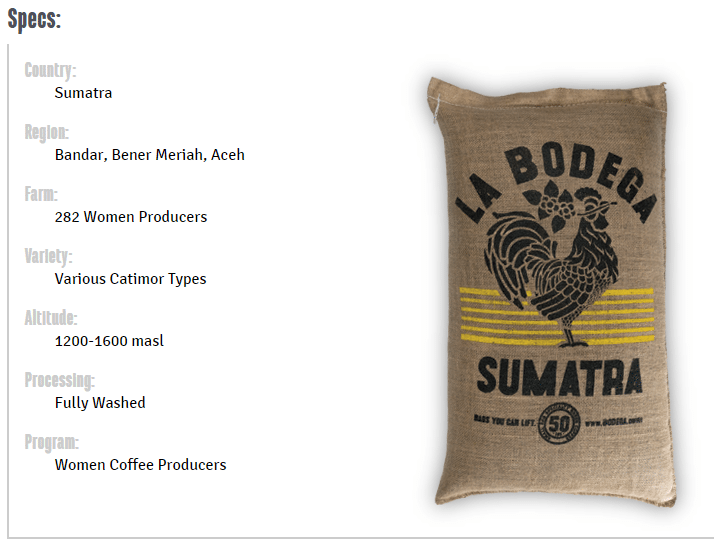
    Now, Grumpy Goat Coffee is proud to contribute to this industry effort to help farmers. Our single origin Sumatra coffee from La Bodega is produced by farmers in the Women Coffee Producer Program.

    [/fusion_text][/fusion_builder_column][/fusion_builder_row][/fusion_builder_container][fusion_builder_container hundred_percent=”yes” hundred_percent_height=”no” hundred_percent_height_scroll=”no” hundred_percent_height_center_content=”yes” equal_height_columns=”yes” menu_anchor=”” hide_on_mobile=”small-visibility,medium-visibility,large-visibility” class=”bckgrdPic” id=”” background_color=”” background_image=”” background_position=”center center” background_repeat=”no-repeat” fade=”no” background_parallax=”none” enable_mobile=”no” parallax_speed=”0.3″ video_mp4=”” video_webm=”” video_ogv=”” video_url=”” video_aspect_ratio=”16:9″ video_loop=”yes” video_mute=”yes” video_preview_image=”” border_color=”” border_style=”solid” margin_top=”0″ margin_bottom=”0″ padding_top=”0″ padding_right=”5%” padding_bottom=”0″ padding_left=”5%” type=”legacy” flex_align_items=”stretch” flex_column_spacing=”0px”][fusion_builder_row][fusion_builder_column type=”1_1″ layout=”1_2″ spacing=”0″ center_content=”yes” link=”” target=”_self” min_height=”” hide_on_mobile=”small-visibility,medium-visibility,large-visibility” class=”” id=”” background_color=”” background_image=”” background_position=”left top” undefined=”” background_repeat=”no-repeat” hover_type=”none” border_color=”” border_style=”solid” border_position=”all” padding_top=”2%” padding_right=”0″ padding_bottom=”2%” padding_left=”0″ margin_top=”0″ margin_bottom=”-20px” animation_type=”” animation_direction=”left” animation_speed=”0.3″ animation_offset=”” last=”true” align_content=”center” border_sizes_top=”0″ border_sizes_bottom=”0″ border_sizes_left=”0″ border_sizes_right=”0″ type=”1_1″ first=”true”][fusion_text columns=”” column_min_width=”” column_spacing=”” rule_style=”default” rule_size=”” rule_color=”” class=”” id=””]

    Grumpy Goat WP Sumatra

    [/fusion_text][fusion_text columns=”” column_min_width=”” column_spacing=”” rule_style=”default” rule_size=”” rule_color=”” class=”” id=””]

    According to La Bodega,

    “There are a total of 282 producers that contributed coffee to this specific lot, all of whom are women. These women either own, or manage a farm of an average area of 1.5 hectares. The Item Reje Gayo cooperative works with this group of women producers, helping to educate in terms of production practices, and overseeing the application of a premium that was included in the purchase of this coffee.”

    So, what’s the premium and where is it going? At the village meeting, the majority vote chose to use the premium to purchase new tools for their craft. The premiums will be used to purchase essential items such as, shovels, hoes, saws, and shears. This program, and others like it, are integral to the future of a sustainable coffee industry.

    [/fusion_text][/fusion_builder_column][/fusion_builder_row][/fusion_builder_container][fusion_builder_container hundred_percent=”no” hundred_percent_height=”no” hundred_percent_height_scroll=”no” hundred_percent_height_center_content=”yes” equal_height_columns=”no” menu_anchor=”” hide_on_mobile=”small-visibility,medium-visibility,large-visibility” class=”” id=”” background_color=”” background_image=”” background_position=”center center” background_repeat=”no-repeat” fade=”no” background_parallax=”none” enable_mobile=”no” parallax_speed=”0.3″ video_mp4=”” video_webm=”” video_ogv=”” video_url=”” video_aspect_ratio=”16:9″ video_loop=”yes” video_mute=”yes” video_preview_image=”” border_color=”” border_style=”solid” margin_top=”” margin_bottom=”” padding_top=”” padding_right=”” padding_bottom=”” padding_left=”” type=”legacy”][fusion_builder_row][fusion_builder_column type=”1_1″ layout=”1_1″ spacing=”” center_content=”no” link=”” target=”_self” min_height=”” hide_on_mobile=”small-visibility,medium-visibility,large-visibility” class=”” id=”” background_color=”” background_image=”” background_position=”left top” undefined=”” background_repeat=”no-repeat” hover_type=”none” border_color=”” border_style=”solid” border_position=”all” padding_top=”” padding_right=”” padding_bottom=”” padding_left=”” margin_top=”50px” margin_bottom=”” animation_type=”” animation_direction=”left” animation_speed=”0.3″ animation_offset=”” last=”true” border_sizes_top=”0″ border_sizes_bottom=”0″ border_sizes_left=”0″ border_sizes_right=”0″ type=”1_1″ first=”true”][fusion_text columns=”” column_min_width=”” column_spacing=”” rule_style=”default” rule_size=”” rule_color=”” content_alignment_medium=”” content_alignment_small=”” content_alignment=”” hide_on_mobile=”small-visibility,medium-visibility,large-visibility” sticky_display=”normal,sticky” class=”” id=”” font_size=”” line_height=”” letter_spacing=”” text_color=”” animation_type=”” animation_direction=”left” animation_speed=”0.3″ animation_offset=””]

    You want to know what makes supporting programs like the Women Coffee Producer Program even better? We’re benefiting from some truly stellar product! The program alone moved us, but it was the coffee that kept us.
    This Sumatra coffee is truly in a league of it’s own. It’s tasting notes include a combination of berry, mango, roasted carrots and red peppers. The coffee retains a soft, sweet and creamy texture with intense acidity.

    At Grumpy Goat Coffee, it is our mission to offer our customers incredible tasting coffee from great sources. Cafe Imports, the brains behind the Women Coffee Producer Program says it best,

    [/fusion_text][/fusion_builder_column][/fusion_builder_row][/fusion_builder_container][fusion_builder_container hundred_percent=”yes” hundred_percent_height=”no” hundred_percent_height_scroll=”no” hundred_percent_height_center_content=”yes” equal_height_columns=”no” menu_anchor=”” hide_on_mobile=”small-visibility,medium-visibility,large-visibility” class=”bckgrdQuote” id=”” background_color=”” background_image=”” background_position=”center center” background_repeat=”no-repeat” fade=”no” background_parallax=”none” enable_mobile=”no” parallax_speed=”0.3″ video_mp4=”” video_webm=”” video_ogv=”” video_url=”” video_aspect_ratio=”16:9″ video_loop=”yes” video_mute=”yes” video_preview_image=”” border_color=”” border_style=”solid” margin_top=”50px” margin_bottom=”50px” padding_top=”” padding_right=”” padding_bottom=”” padding_left=”” type=”legacy”][fusion_builder_row][fusion_builder_column type=”1_6″ layout=”1_6″ spacing=”” center_content=”no” link=”” target=”_self” min_height=”” hide_on_mobile=”small-visibility,medium-visibility,large-visibility” class=”” id=”” background_color=”” background_image=”” background_position=”left top” undefined=”” background_repeat=”no-repeat” hover_type=”none” border_color=”” border_style=”solid” border_position=”all” padding_top=”” padding_right=”” padding_bottom=”” padding_left=”” margin_top=”50px” margin_bottom=”” animation_type=”” animation_direction=”left” animation_speed=”0.3″ animation_offset=”” last=”false” border_sizes_top=”0″ border_sizes_bottom=”0″ border_sizes_left=”0″ border_sizes_right=”0″ type=”1_6″ first=”true” spacing_right=””][fusion_text]

    [/fusion_text][/fusion_builder_column][fusion_builder_column type=”2_3″ layout=”1_3″ spacing=”” center_content=”no” link=”” target=”_self” min_height=”” hide_on_mobile=”small-visibility,medium-visibility,large-visibility” class=”” id=”” background_color=”” background_image=”” background_position=”left top” undefined=”” background_repeat=”no-repeat” hover_type=”none” border_color=”” border_style=”solid” border_position=”all” padding_top=”” padding_right=”0px” padding_bottom=”” padding_left=”0px” margin_top=”50px” margin_bottom=”” animation_type=”” animation_direction=”left” animation_speed=”0.3″ animation_offset=”” last=”false” border_sizes_top=”0″ border_sizes_bottom=”0″ border_sizes_left=”0″ border_sizes_right=”0″ type=”2_3″ first=”false” spacing_right=””][fusion_text]

    We believe there is a synergetic relationship between coffee, community, and progress: It can take an entire community to progress in producing coffee, and coffee can create progress for a community.

    [/fusion_text][/fusion_builder_column][fusion_builder_column type=”1_6″ layout=”1_6″ spacing=”” center_content=”no” link=”” target=”_self” min_height=”” hide_on_mobile=”small-visibility,medium-visibility,large-visibility” class=”” id=”” background_color=”” background_image=”” background_position=”left top” undefined=”” background_repeat=”no-repeat” hover_type=”none” border_color=”” border_style=”solid” border_position=”all” padding_top=”” padding_right=”” padding_bottom=”” padding_left=”” margin_top=”50px” margin_bottom=”” animation_type=”” animation_direction=”left” animation_speed=”0.3″ animation_offset=”” last=”true” border_sizes_top=”0″ border_sizes_bottom=”0″ border_sizes_left=”0″ border_sizes_right=”0″ type=”1_6″ first=”false”][fusion_text]

    [/fusion_text][/fusion_builder_column][/fusion_builder_row][/fusion_builder_container][fusion_builder_container hundred_percent=”no” hundred_percent_height=”no” hundred_percent_height_scroll=”no” hundred_percent_height_center_content=”yes” equal_height_columns=”no” menu_anchor=”” hide_on_mobile=”small-visibility,medium-visibility,large-visibility” class=”” id=”” background_color=”” background_image=”” background_position=”center center” background_repeat=”no-repeat” fade=”no” background_parallax=”none” enable_mobile=”no” parallax_speed=”0.3″ video_mp4=”” video_webm=”” video_ogv=”” video_url=”” video_aspect_ratio=”16:9″ video_loop=”yes” video_mute=”yes” video_preview_image=”” border_color=”” border_style=”solid” margin_top=”” margin_bottom=”” padding_top=”” padding_right=”” padding_bottom=”” padding_left=”” type=”legacy”][fusion_builder_row][fusion_builder_column type=”1_1″ layout=”1_1″ spacing=”” center_content=”no” link=”” target=”_self” min_height=”” hide_on_mobile=”small-visibility,medium-visibility,large-visibility” class=”” id=”” background_color=”” background_image=”” background_position=”left top” undefined=”” background_repeat=”no-repeat” hover_type=”none” border_color=”” border_style=”solid” border_position=”all” padding_top=”” padding_right=”” padding_bottom=”” padding_left=”” margin_top=”50px” margin_bottom=”” animation_type=”” animation_direction=”left” animation_speed=”0.3″ animation_offset=”” last=”true” border_sizes_top=”0″ border_sizes_bottom=”0″ border_sizes_left=”0″ border_sizes_right=”0″ type=”1_1″ first=”true”][fusion_text columns=”” column_min_width=”” column_spacing=”” rule_style=”default” rule_size=”” rule_color=”” class=”” id=””]

    It takes production to progress and it’s fueled by coffee!

    [/fusion_text][/fusion_builder_column][/fusion_builder_row][/fusion_builder_container]